Foreign buyers in Central Asia may not be able to buy affordable Chinese cars in the future.

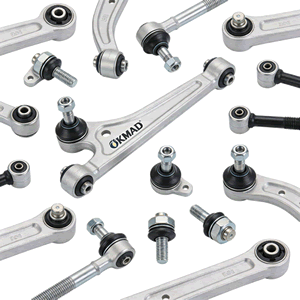
Product Overview
'An ideal L9 that costs more than RMB 400,000 in China can be sold for 11 million rubles (approximately more than RMB 900,000) in Russia! Is this profit more exaggerated than drug trafficking?'You read that right, this i
Key Features
- Meet or exceed OEM requirements
- 2 years warranty
- Strict quality control
- Complete testing from material to product
Quality Assurance

"An ideal L9 that costs more than RMB 400,000 in China can be sold for 11 million rubles (approximately more than RMB 900,000) in Russia! Is this profit more exaggerated than drug trafficking?"

You read that right, this is the crazy current situation of Chinese new energy vehicles in the Central Asian and Russian markets. But recently, a new regulation from the Ministry of Commerce has directly put the brakes on this wave of "profiteering business" - starting from 2026, the export of pure electric vehicles must be authorized by car companies, and those "zero-kilometer second-hand cars" that take advantage of the loopholes may be in trouble.
"An ideal L9 that costs more than RMB 400,000 in China can be sold for 11 million rubles (approximately more than RMB 900,000) in Russia! Is this profit more exaggerated than drug trafficking?"
You read that right, this is the crazy current situation of Chinese new energy vehicles in the Central Asian and Russian markets. But recently, a new regulation from the Ministry of Commerce has directly put the brakes on this wave of "profiteering business" - starting from 2026, the export of pure electric vehicles must be authorized by car companies, and those "zero-kilometer second-hand cars" that take advantage of the loopholes may be in trouble.

Why the sudden tightening? What's the secret behind it? What exactly have Chinese car companies experienced abroad?

In 2021, China's automobile export volume was only 2 million vehicles. By 2025, it will soar to more than 5 million vehicles, abruptly knocking Japan out of the world's number one spot. New energy vehicles have contributed a lot, but amid the carnival, a gray industrial chain is also growing wildly - the export of zero-kilometer second-hand cars.

What is a zero-kilometer used car? To put it simply, the new car has just left the factory and has not even traveled a kilometer, and is exported directly as a "second-hand car". Why do you do this? Because the export of new cars requires certification, the procedures are cumbersome, while the export of second-hand cars has fewer restrictions and can easily bypass supervision.

Central Asia has become a golden channel for this gray trade. The car was first transported to the Horgos Port in Xinjiang and then entered Kazakhstan in the name of a second-hand car. Since the Central Asian countries form the Eurasian Economic Union, these cars can also be sold duty-free to Russia and even Eastern Europe.

William Ng, the marketing director of Chongqing Huanyu Automobile, revealed that from 2022 to 2023, they spent 40,000 yuan to buy a tram in China and could earn 10,000 yuan by selling it to the Middle East. The popular models are even more exaggerated. The ideal L9 sold for more than 400,000 yuan in China, and it doubled when it arrived in Russia, with a maximum price of more than 900,000 yuan.

In the beginning, this business was a "win-win-win" - the Russian market was abandoned by Western car companies, and Chinese cars quickly filled the gap; Central Asian consumers bought cheap and easy-to-use new energy vehicles; Chinese car dealers made a lot of money.

But the good times did not last long. As more and more entrants entered the game, vicious competition began. Do you earn 10,000? Then I will earn 5,000 yuan, and some people even only earn 500 yuan. Foreign buyers are not stupid. They quickly figured out the cost price of Chinese cars and even had to give up the 13% export tax rebate.

Low-price competition has not only caused car dealers' profits to plummet, but has also seriously disrupted the overseas pricing of Chinese car companies. For example, in Kazakhstan, the Song PLUS DM-i officially sold by BYD costs 235,000 yuan, while the zero-kilometer second-hand car only costs 140,000 yuan, a price difference of nearly 100,000 yuan! Of course, consumers will choose the cheaper one, but this is a critical blow to car companies that are serious about going overseas.

Why is the official price so expensive? Because the cost of going overseas for car companies is much higher than imagined. For example, Toyota's Hilux pickup can withstand temperatures of 50°C in the Middle East, can adapt to low-quality gasoline in Africa, and has a specially enhanced suspension version in Southeast Asia - these localized adjustments are all about money.

The gray export car dealers only sell, not after-sales, let alone local adaptation. Over time, if large-scale quality problems arise, the reputation of Chinese motorcycles may collapse, repeating the same mistake that made Chinese motorcycles lose their way to Southeast Asia.

What's even more troublesome is that overseas markets have increasingly strict requirements for automotive after-sales and regulations. For example, in Europe and the United States, third-party repair shops can subscribe to the repair technology of car companies, so consumers do not have to go to 4S stores to repair their cars. However, the profit model of many Chinese car companies relies on 4S store binding. This method will not work at all after going overseas.

There are also a bunch of certification thresholds - vehicle verification (WVTA), safety and environmental protection certification (E/e-mark), network security certification (CSMS), battery passport... Gray export car dealers simply cannot handle it, and they all rely on taking advantage of policy loopholes. But now, the loopholes are being closed.

Last year, the President of Uzbekistan personally visited China, and Rabyad went to build a factory; this year, Ideal also set its first overseas stop in Uzbekistan. Russia is even more ruthless, directly raising recycling fees and closing the loopholes in duty-free imports from Central Asia. Now when a Chinese car enters Russia, the recycling fee alone has to be paid 60,000 yuan.

Obviously, these countries no longer want to be "transit stations". What they want is for formal car companies to settle in and drive local employment and industrial chains. The new regulations of China's four ministries and commissions are in line with this trend-from 2026, the export of pure electric vehicles must be authorized by car companies, and the good days of gray trade are over.

The barbaric growth stage of this "automobile voyage" is finally coming to an end.
| Material | High-tensile steel / forged aluminum |
|---|---|
| Finish | E-coat / powder paint / zinc plating |
| Standards | IATF / ISO-based process control |
| Warranty | 24 months |
| MOQ | 50-100 pcs per reference |
| Lead Time | 25-35 days after PO |
Compatible Brands:
Toyota, Honda, Nissan, BMW, Mercedes-Benz, Ford, Hyundai, Kia, Volkswagen, Land Rover, and more...
Request a Quote
Just for B2B inquiries, no retail please. We'll get back to you within 24 hours.
Related Products