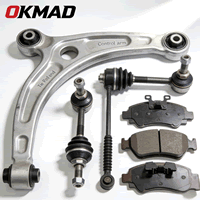
As a key component in the automotive brake system, the brake ring directly affects driving safety. The following are common fault types, causes and response suggestions for brake rings. The system is sorted out based on technical principles and maintenance experience: ### 1. Abnormal wear faults 1. **Pin-adverse wear phenomenon** It is manifested as the difference in wear thickness between the inner and outer sides of the brake ring exceeds 1mm. The main causes include: - Inadequate lubrication of the brake caliper guide pin leads to poor return position - The rust of the piston of the separate pump produces one-sided braking force - The contact surface of the wheel hub is not cleaned during installation and causes a slant*Typical case*: A car model caused the guide pin to enter sand due to the damage to the dust cover, and a 0.8mm grinding amount occurred at 30,000 kilometers. 2. **Abnormal groove wear** Radiated groove marks appear on the surface, mostly because of: - The hard particles of brake pads are embedded (commonly in inferior brake pads) - The brake disc heat treatment process defects lead to local hardness unevenness - Long-term low-temperature braking causes uneven transfer of friction materials### 2. Heat damage failures 1. **Thermal cracks** After intense driving, the hazard threshold standard is: - Radial crack length > 5mm - More than 1/3 of the friction surface * Cause*: Thermal stress is generated by quenching at high temperatures above 600℃ in an instant. During a track day, 10 consecutive sudden brakes caused cracks in performance cars. 2. **Heat fading deformation** is manifested as brake pedal jitter. Detection indicators: - End surface jumping amount > 0.05mm - Thickness change amount > 0.02mm It is recommended to use a dial meter to detect flatness every 20,000 kilometers. It is a typical sign that blue-purple oxidation spots appear in the high temperature zone. ### 3. Structural damage failures 1. **Fatiguness breakage** It is often foun
As a key component in the automotive brake system, the brake ring directly affects driving safety. The following are common fault types, causes and response suggestions for brake rings. The system is sorted out based on technical principles and maintenance experience: ### 1. Abnormal wear faults 1. **Pin-adverse wear phenomenon** It is manifested as the difference in wear thickness between the inner and outer sides of the brake ring exceeds 1mm. The main causes include: - Inadequate lubrication of the brake caliper guide pin leads to poor return position - The rust of the piston of the separate pump produces one-sided braking force - The contact surface of the wheel hub is not cleaned during installation and causes a slant*Typical case*: A car model caused the guide pin to enter sand due to the damage to the dust cover, and a 0.8mm grinding amount occurred at 30,000 kilometers. 2. **Abnormal groove wear** Radiated groove marks appear on the surface, mostly because of: - The hard particles of brake pads are embedded (commonly in inferior brake pads) - The brake disc heat treatment process defects lead to local hardness unevenness - Long-term low-temperature braking causes uneven transfer of friction materials### 2. Heat damage failures 1. **Thermal cracks** After intense driving, the hazard threshold standard is: - Radial crack length > 5mm - More than 1/3 of the friction surface * Cause*: Thermal stress is generated by quenching at high temperatures above 600℃ in an instant. During a track day, 10 consecutive sudden brakes caused cracks in performance cars. 2. **Heat fading deformation** is manifested as brake pedal jitter. Detection indicators: - End surface jumping amount > 0.05mm - Thickness change amount > 0.02mm It is recommended to use a dial meter to detect flatness every 20,000 kilometers. It is a typical sign that blue-purple oxidation spots appear in the high temperature zone. ### 3. Structural damage failures 1. **Fatiguness breakage** It is often found at the connection of the ventilated disc heat dissipation ribs, and shell patterns can be seen on the fracture surface. Statistics from a certain logistics fleet show that: - The occurrence rate of heavy trucks over 300,000 kilometers is 12% - The correlation with frequent braking in mountainous areas is 67%. 2. **Corrosion of installation surface** Rust on the wheel hub contact surface will cause: - The preload force of the bolt is reduced by more than 50% - Dynamic imbalance increases by 3 times. It is recommended to use special anti-rust grease to treat the contact surface. A brand uses Darkro coating and reduces the rework rate by 80%. ### 4. Functional faults 1. **Braking noise** Different frequencies correspond to different problems: - 2-4kHz scream: sound-silencer chip falls off - 800-1.5kHz hum: resonance frequency matching - Random abnormal noise: The hardness of the friction material exceeds the standard 2. **Insufficient braking force** Need to check: - Friction coefficient attenuation (new disk 0.4 → old disk below 0.3) - Insufficient contact area (should be >80%) A certain test shows that the punched disk is 15% higher than the initial friction coefficient of the solid disk, but attenuation is faster after 80,000 kilometers. ### V. Prevention and maintenance plan 1. **Detection cycle suggestions** - Daily: monthly visual inspection of wear status - Every 10,000 kilometers: measure residual thickness (see model manual for the minimum warning value) - Every 30,000 kilometers: check the deviation amount on the shelves 2. **Comparison of upgrade plan** | Type | Life (km) | Heat attenuation temperature | Price coefficient | |---------------------------------------------------------------------------------------------------------------------------------------------------------------------------------------------------------------------------------------------------------------------------------------------------------------------------------------------------------------------------------------------------------------- When there are slight grooves, turning and repair can be performed, but attention should be paid to: - Single-side cutting volume ≤1.5mm - Movement balance is required after processing - More than 2 repairs are prohibited. For high-performance vehicles, it is recommended to conduct magnetic particle flaw detection inspection after every 5 track times. During daily maintenance, use infrared thermometer to monitor the braking temperature difference between each wheel (the normal difference should be <30℃), and problems such as abnormal caliper return position can be found in advance. Selecting original certified accessories can effectively avoid more than 80% of abnormal wear and failure.