The third-generation Volkswagen Tiguan is launched in Japan, with a starting price of about 229,000 yuan, and a mild hybrid system is optional.

Product Overview
The third-generation Volkswagen Tiguan is officially launched in Japan, with vehicle prices including tax ranging from 4,871,000 yen to 6,532,000 yen (approximately between 229,000 and 307,000 yuan). Petrol and diesel ar
Key Features
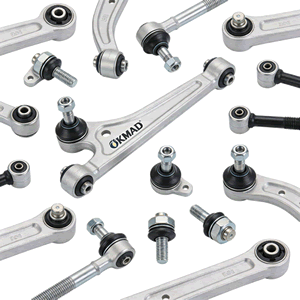
- Meet or exceed OEM requirements
- 2 years warranty
- Strict quality control
- Complete testing from material to product
Quality Assurance
The third-generation Volkswagen Tiguan is officially launched in Japan, with vehicle prices including tax ranging from 4,871,000 yen to 6,532,000 yen (approximately between 229,000 and 307,000 yuan). Petrol and diesel are available in three grades: "Active", "Elegance" and "R Line", with a total of six different configurations.

Since the launch of the first model in 2007, Tiguan has sold more than 7.6 million vehicles worldwide and has been the best-selling model in the entire Volkswagen Group since 2019. The new Tiguan, which has been fully redesigned for the first time in seven years, has entered its third generation. By placing the hood in a higher position than the previous model, it emphasizes the power of the SUV and also pursues aerodynamic performance. The air resistance coefficient has been increased from 0.33 to 0.28. . The body dimensions are 4,545mm long, 1,840mm wide, and 1,655mm high (the R model is 4,540mm long, 1,860mm wide, and 1,655mm high). The wheelbase is 2,680mm. The minimum turning radius of all cars is 5.4m.
The third-generation Volkswagen Tiguan is officially launched in Japan, with vehicle prices including tax ranging from 4,871,000 yen to 6,532,000 yen (approximately between 229,000 and 307,000 yuan). Petrol and diesel are available in three grades: "Active", "Elegance" and "R Line", with a total of six different configurations.
Since the launch of the first model in 2007, Tiguan has sold more than 7.6 million vehicles worldwide and has been the best-selling model in the entire Volkswagen Group since 2019. The new Tiguan, which has been fully redesigned for the first time in seven years, has entered its third generation. By placing the hood in a higher position than the previous model, it emphasizes the power of the SUV and also pursues aerodynamic performance. The air resistance coefficient has been increased from 0.33 to 0.28. . The body dimensions are 4,545mm long, 1,840mm wide, and 1,655mm high (the R model is 4,540mm long, 1,860mm wide, and 1,655mm high). The wheelbase is 2,680mm. The minimum turning radius of all cars is 5.4m.

The platform uses MQB evo, which is a further evolution of the traditional MQB architecture. As a result, the adaptive chassis control "DCC" was changed to "DCC Pro", the traditional matrix headlights "IQ LIGHT" were changed to "IQ LIGHT" HD, and the infotainment system also evolved into a new generation, using many technologies from the upstream field.

The adaptive chassis control system "DCC" has been developed into the first-in-class 2-valve independent control type "DCC Pro", realizing complex control that cannot be achieved by traditional mechanisms. The internal structure has independent oil circuits on the telescopic side, which can control the damping force separately. By using this technology, the new Tiguan has reached unprecedented levels in terms of dynamic driving and comfortable ride comfort. In sport mode, you can experience the agile handling unique to Volkswagen.

In addition, "DCC Pro" combined with the "Vehicle Dynamics Manager" enables highly coordinated control of the electronically controlled differential lock (XDS) and independently variable control of the four wheels depending on the driving situation, allowing for precise Steering response.
The LED matrix headlights featured on previous models use a front-facing camera to detect oncoming vehicles and vehicles ahead, and achieve optimal light distribution by individually controlling the lighting and extinguishing of the LEDs installed in the matrix modules. The "Elegance" and "R Line" models of the new Tiguan come standard with the more advanced "IQ.LIGHT" HD. Equipped with 19,200 high-definition multi-pixel LEDs on each side, they can be controlled more granularly than before, providing a wider range of lighting at night and in dark places.

Driving experience controls located on the center console provide quick access to functions such as adjusting volume and selecting driving modes. In addition to the basic "Active" grade, the driver and passenger seats in the "Elegance" and "R-Line" grades are equipped with a pneumatic massage function as standard.

Additionally, when the Leather Seat Package is optionally available, a massage relaxation function can be selected from eight modes on both the driver and passenger seats. In addition, the seat ventilation function dissipates heat between the occupant and the seat to maintain comfort, and the seat heater and ventilation can be set to run automatically when outside temperature is detected.

The lineup includes two powertrain models: the Tiguan’s first 1.5-liter eTSI mild hybrid system (FWD), and the 2.0-liter TDI clean diesel engine, combined with the 4MOTION full-time all-wheel drive system.
The 1.5-liter eTSI gasoline turbine model is equipped with the latest generation EA211 evo2 engine and is equipped with a 7-speed dual-clutch gearbox. The maximum output power can produce 150ps/250N·m. The Active Cylinder Management (ACT) system has been enhanced to improve efficiency by shutting down two of the four cylinders more frequently. It is also possible to stop and restart the engine while driving and switch to eco-coast driving. According to Volkswagen, this saves 0.5 liters of gasoline per 100 kilometers. The WLTC mode fuel efficiency is announced as 15.6km/L.
This is also the first Tiguan to be equipped with a 48V mild hybrid system, which combines a 48V lithium-ion battery (which can store regenerative braking energy) and a 48V water-cooled belt starter generator (18ps/56N·m), which can be used as an AC Generator and starter. The 48V belt starter generator also acts as an electric motor and assists with torque at start-up. Not only does it help improve fuel efficiency, but it also supports starting and acceleration.

On the other hand, the 2.0-liter TDI diesel turbine model is equipped with an in-line 4-cylinder EA288 evo engine, equipped with a 7-speed dual-clutch gearbox, which can produce a maximum output or power of 193ps/400N·m. Equipped with a dual metering system, nitrogen oxide (NOx) emissions are further reduced by increasing the number of SCR systems to two. Combined with the full-time four-wheel drive system "4MOTION", it enables powerful driving. The fuel efficiency in WLTC mode is 15.1km/L.
The 1.5L eTSI and 2.0L TDI are available in three trim levels: "Active," "Elegance" and "R Line." "Active" is the entry-level, equipped as standard with the latest driving assistance systems such as "Travel Assist" all-speed driving assistance system in the same lane, "Lane Assist" lane keeping assistance system, "Side Assist Plus" and lane change assistance system. "Elegance" mark Equipped with LED matrix headlights "IQ.LIGHT HD" and a seat relaxation function for the driver and passenger seats, the R-Line adopts a special exterior design that is 20 mm wider and equipped with special seats and 20 mm. inch aluminum wheels.
| Material | High-tensile steel / forged aluminum |
|---|---|
| Finish | E-coat / powder paint / zinc plating |
| Standards | IATF / ISO-based process control |
| Warranty | 24 months |
| MOQ | 50-100 pcs per reference |
| Lead Time | 25-35 days after PO |
Compatible Brands:
Toyota, Honda, Nissan, BMW, Mercedes-Benz, Ford, Hyundai, Kia, Volkswagen, Land Rover, and more...
Request a Quote
Just for B2B inquiries, no retail please. We'll get back to you within 24 hours.
Related Products