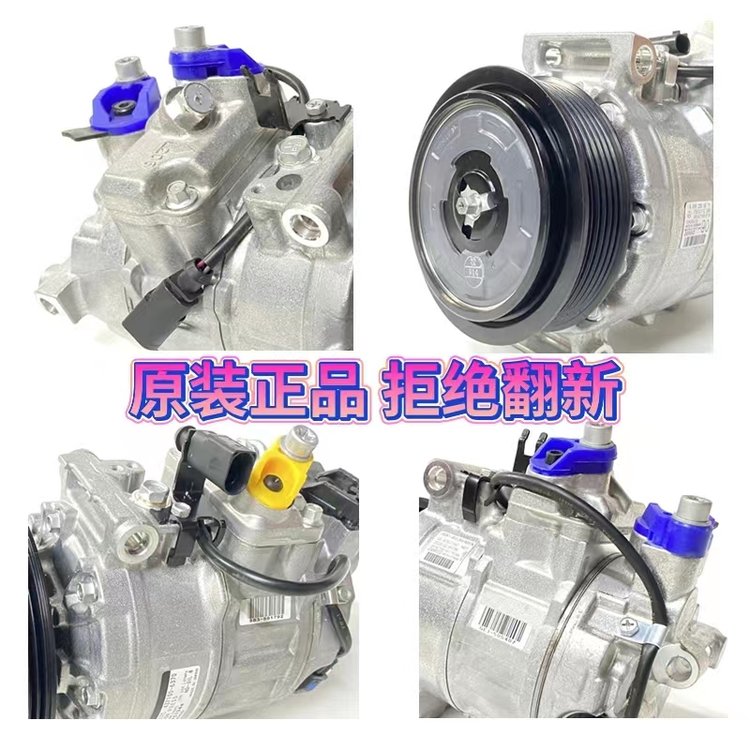
The automotive air conditioning compressor is the core component of the automotive air conditioning system. It is responsible for compressing the low-temperature and low-pressure gaseous refrigerant into a high-temperature and high-pressure state to promote the refrigeration cycle. Its performance directly affects the refrigeration efficiency, energy consumption and system stability of air conditioning. Especially in high temperature environments, the continuous operation ability of the compressor is the key to ensuring the comfort in the car. Due to differences in engine compartment layout and power systems, Mercedes-Benz C200, E200, E300 and other models have higher adaptability requirements for compressors. It is necessary to choose a model that matches the original vehicle parameters to avoid compatibility issues.
1. Technical principle and core structure: The air conditioning compressor drives the piston or scroll movement through the motor to realize the compression and circulation of the refrigerant. Common types include swash plate, scroll and rotary vane. Among them, the scroll type has gradually become the mainstream choice for high-end models due to its high efficiency and low noise. Its interior is composed of a fixed scroll, a movable scroll, a motor and a sealing component. The movable scroll moves in a plane around the fixed scroll to form multiple compression chambers to compress the refrigerant step by step. Sealing is a key indicator, and special materials and processes are required to prevent refrigerant leakage and ensure long-term operational stability.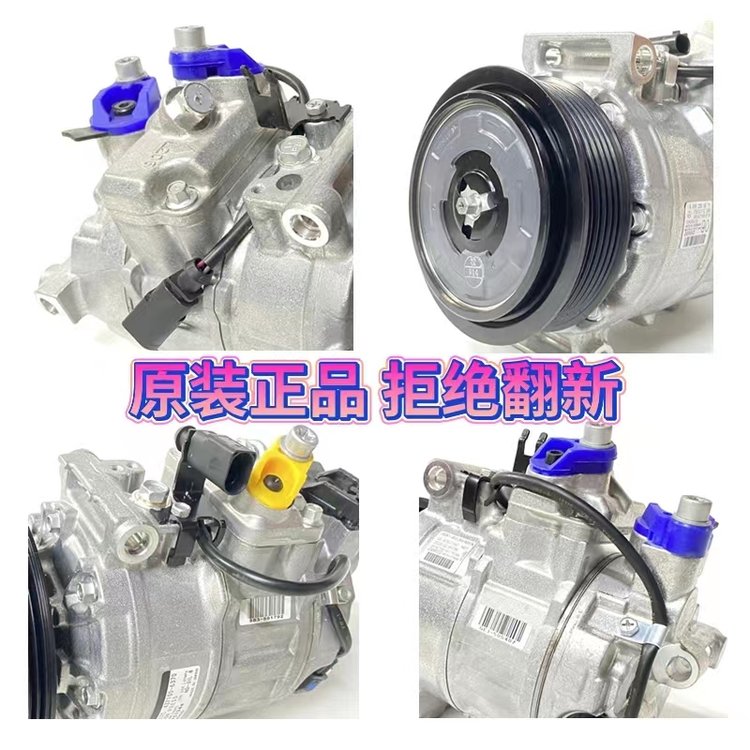
2. Technical po
The automotive air conditioning compressor is the core component of the automotive air conditioning system. It is responsible for compressing the low-temperature and low-pressure gaseous refrigerant into a high-temperature and high-pressure state to promote the refrigeration cycle. Its performance directly affects the refrigeration efficiency, energy consumption and system stability of air conditioning. Especially in high temperature environments, the continuous operation ability of the compressor is the key to ensuring the comfort in the car. Due to differences in engine compartment layout and power systems, Mercedes-Benz C200, E200, E300 and other models have higher adaptability requirements for compressors. It is necessary to choose a model that matches the original vehicle parameters to avoid compatibility issues.
1. Technical principle and core structure: The air conditioning compressor drives the piston or scroll movement through the motor to realize the compression and circulation of the refrigerant. Common types include swash plate, scroll and rotary vane. Among them, the scroll type has gradually become the mainstream choice for high-end models due to its high efficiency and low noise. Its interior is composed of a fixed scroll, a movable scroll, a motor and a sealing component. The movable scroll moves in a plane around the fixed scroll to form multiple compression chambers to compress the refrigerant step by step. Sealing is a key indicator, and special materials and processes are required to prevent refrigerant leakage and ensure long-term operational stability.
2. Technical points for adapting to Mercedes-Benz models: Compressors adapted to multiple Mercedes-Benz models must meet three core requirements: First, the interface size matches, including the refrigerant pipeline interface, electrical connector shape and pin definition, to ensure seamless connection with the original vehicle system; second, the pressure range is compatible. The high and low pressure thresholds of the original vehicle air conditioning system need to be covered to avoid compressor overload or insufficient cooling due to pressure mismatch; third, the electromagnetic clutch parameters must be consistent, including pull-in voltage, release voltage and operating current, to ensure normal signal interaction with the engine control unit (ECU). In addition, some models require a compressor with a specific displacement to maintain the heat balance in the engine compartment.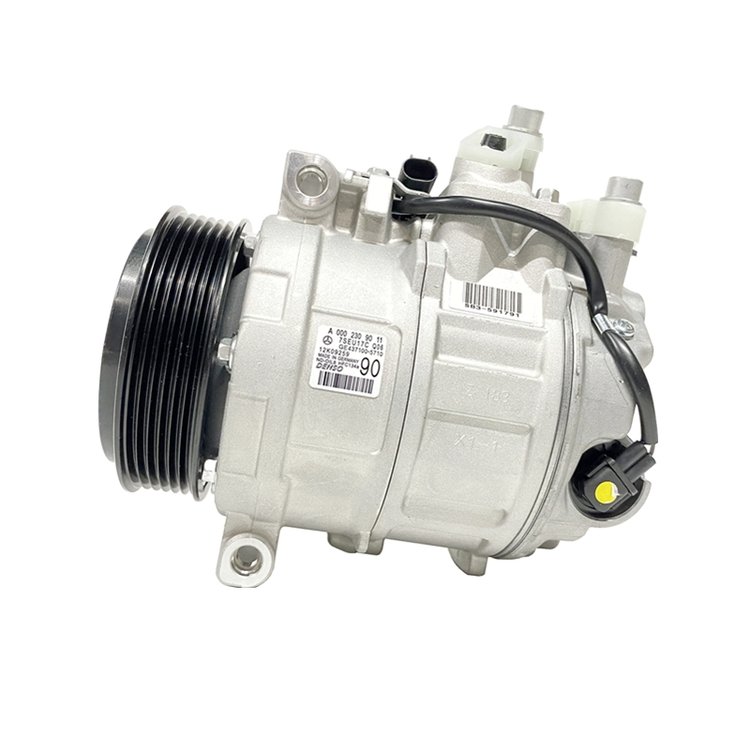
3. Performance optimization and actual performance: The compressor adapted to Mercedes-Benz models has undergone many optimizations at the technical level. For example, low-friction bearing design is used to reduce mechanical losses and improve energy efficiency ratio; the motor winding layout is optimized to reduce electromagnetic noise and improve NVH (noise, vibration and harshness) performance; the strength of the shell is enhanced to adapt to the high temperature environment of the engine compartment and avoid sealing failure due to thermal expansion. In actual use, this type of compressor can still maintain stable cooling in high-temperature environments above 40°C, and has lower starting current and less burden on the vehicle battery.
🛒 Suitable for Mercedes-Benz C200 E200 E300 R350 S350 ML350 GL450 Viano air conditioning compressor
4. Precautions for installation and maintenance: Before installation, check whether the compressor model is consistent with the original vehicle accessory number, and check whether the refrigerant type (such as R134a or R1234yf) matches. During installation, the drying bottle needs to be replaced to prevent impurities in the original system from entering the new compressor; the vacuuming time must be more than 30 minutes to ensure that no air remains in the system. During routine maintenance, it is recommended to check the status of the compressor lubricating oil every two years. If the oil turns black or contains metal debris, the compressor assembly needs to be replaced in time. When the vehicle is parked for a long time, it is recommended to start the air conditioner and run it for 10 minutes every month to prevent the compressor seals from aging.