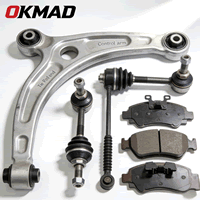
Car Maintenance Costs and the Impact of Frequent Braking
As a car owner, you may be well aware of how frequent braking can affect your car\'s maintenance costs. The more you brake, the faster your brake pads wear out, and the more often you need to replace them. This not only adds to your car maintenance costs but also reduces your car\'s lifespan. In this article, we will provide you with some tips to reduce brake wear and extend your car\'s lifespan, thereby reducing your car maintenance costs.
1. Understanding How Braking Works
To reduce brake wear, it is essential to understand how braking works. When you press the brake pedal, it forces the brake pads to press against the brake discs, creating friction that slows down the car. The more you brake, the more heat is generated, which can cause the brake pads to wear out faster. Therefore, it is essential to avoid unnecessary braking and use the brakes only when necessary.
2. Tips to Reduce Brake Wear
There are several tips to reduce brake wear and extend the lifespan of your car. Firstly, avoid sudden stops and starts, which can cause unnecessary wear and tear on your brake pads. Instead, try to maintain a steady speed and anticipate stops ahead of time. Secondly, avoid overloading your car as it can put extra pressure on your brakes. Thirdly, avoid riding your brakes as it can cause excessive heat and wear on the brake pads. Instead, try to coast whenever possible.
3. Tips to Extend Your Car\'s Lifespan
Apart from reducing brake wear, there are other ways to extend your car\'s lifespan and reduce your car maintenance costs. Firstly, maintain your car regularly by following the manufacturer\'s recommended maintenance schedule. This includes regular oil changes, filter replacements, and brake inspections. Secondly, avoid aggressive driving as it can cause excessive wear and tear on your car\'s engine, transmission, and suspension. Thirdly, avoid harsh road conditi
Car Maintenance Costs and the Impact of Frequent Braking
As a car owner, you may be well aware of how frequent braking can affect your car\'s maintenance costs. The more you brake, the faster your brake pads wear out, and the more often you need to replace them. This not only adds to your car maintenance costs but also reduces your car\'s lifespan. In this article, we will provide you with some tips to reduce brake wear and extend your car\'s lifespan, thereby reducing your car maintenance costs.
1. Understanding How Braking Works
To reduce brake wear, it is essential to understand how braking works. When you press the brake pedal, it forces the brake pads to press against the brake discs, creating friction that slows down the car. The more you brake, the more heat is generated, which can cause the brake pads to wear out faster. Therefore, it is essential to avoid unnecessary braking and use the brakes only when necessary.
2. Tips to Reduce Brake Wear
There are several tips to reduce brake wear and extend the lifespan of your car. Firstly, avoid sudden stops and starts, which can cause unnecessary wear and tear on your brake pads. Instead, try to maintain a steady speed and anticipate stops ahead of time. Secondly, avoid overloading your car as it can put extra pressure on your brakes. Thirdly, avoid riding your brakes as it can cause excessive heat and wear on the brake pads. Instead, try to coast whenever possible.
3. Tips to Extend Your Car\'s Lifespan
Apart from reducing brake wear, there are other ways to extend your car\'s lifespan and reduce your car maintenance costs. Firstly, maintain your car regularly by following the manufacturer\'s recommended maintenance schedule. This includes regular oil changes, filter replacements, and brake inspections. Secondly, avoid aggressive driving as it can cause excessive wear and tear on your car\'s engine, transmission, and suspension. Thirdly, avoid harsh road conditions as it can cause damage to your car\'s undercarriage and suspension.
frequent braking can significantly affect your car maintenance costs. However, by following the tips mentioned above, you can reduce brake wear and extend your car\'s lifespan, thereby reducing your car maintenance costs. Remember to maintain your car regularly, avoid aggressive driving and harsh road conditions, and use your brakes only when necessary. By doing so, you can save money on car maintenance costs and ensure that your car lasts longer.
Tips for Reducing Car Maintenance Costs and Minimizing Wear and Tear
Cars have become an essential part of our daily lives, and we rely on them for transportation to work, school, and other activities. However, owning a car comes with a significant financial responsibility, especially when it comes to maintenance and repair costs. In this article, we will discuss some tips on how to save money on car maintenance and extend your car\'s lifespan.
Regular Maintenance
Regular maintenance is one of the most critical things you can do to extend your car\'s lifespan and save money on maintenance costs. Here are some essential maintenance tasks you should perform regularly:
Oil Changes
Regular oil changes are crucial to keeping your car\'s engine running smoothly. Old or dirty oil can cause unnecessary wear and tear on your engine, leading to costly repairs. You should change your car\'s oil every 5,000 to 7,500 miles, depending on the type of oil and your driving habits.
Tire Maintenance
Proper tire maintenance can help you save money on fuel costs, improve your car\'s handling, and extend the life of your tires. You should check your tire pressure regularly and rotate your tires every 5,000 to 7,500 miles.
Brake Maintenance
Brakes are one of the most critical safety features on your car, and regular maintenance can help prevent accidents and save you money on repairs. You should have your brakes inspected and serviced every 12,000 to 15,000 miles.
DIY Repairs
While some car repairs require the expertise of a professional mechanic, there are several repairs you can do yourself to save money on maintenance costs. Here are some DIY repairs you can do:
Replacing Air Filters
Replacing your car\'s air filters is a simple and inexpensive repair that can improve your car\'s performance and fuel efficiency. You should replace your air filters every 12,000 to 15,000 miles.
Replacing Windshield Wipers
Replacing your car\'s windshield wipers is another simple and inexpensive repair that can improve your visibility while driving. You should replace your windshield wipers every six months to a year.
Replacing Spark Plugs
Replacing your car\'s spark plugs can improve your car\'s fuel efficiency and performance. You should replace your spark plugs every 30,000 to 100,000 miles, depending on the type of spark plugs and your driving habits.
Driving Habits
Your driving habits also play a significant role in extending your car\'s lifespan and reducing maintenance costs. Here are some tips on how to minimize wear and tear on your car:
Avoid Hard Acceleration and Braking
Hard acceleration and braking can cause unnecessary wear and tear on your car\'s engine, brakes, and tires. Try to accelerate and brake gently to extend the life of these components.
Avoid Overloading Your Car
Overloading your car can cause excessive strain on your suspension, brakes, and tires. Try to avoid carrying heavy loads or carrying more passengers than your car can safely accommodate.
Drive Smoothly
Smooth driving can help you save money on fuel costs and reduce wear and tear on your car. Try to maintain a steady speed and avoid sudden stops and starts.
Owning a car can be expensive, but by following these tips, you can save money on maintenance costs and extend your car\'s lifespan. Regular maintenance, DIY repairs, and good driving habits can help you minimize wear and tear on your car and prevent costly repairs. Remember to always consult your car\'s owner\'s manual and seek the advice of a professional mechanic if you are unsure about any repairs.
Hey guys, have you ever considered how much money you spend on car maintenance? Well, the truth is, car maintenance costs can really add up over time, especially if you\'re not taking care of your car properly. One thing that can really impact your car\'s maintenance costs is frequent braking. The more you brake, the more wear and tear you put on your car\'s brakes, tires, and suspension system. So, what can you do to reduce your car maintenance costs and minimize wear and tear? Here are a few tips: 1) Avoid sudden braking and try to brake gradually instead; 2) Keep your tires properly inflated to reduce friction and wear; 3) Follow your car\'s recommended maintenance schedule to keep everything in good working order. By following these simple tips, you can save yourself a lot of money in the long run and keep your car running smoothly.