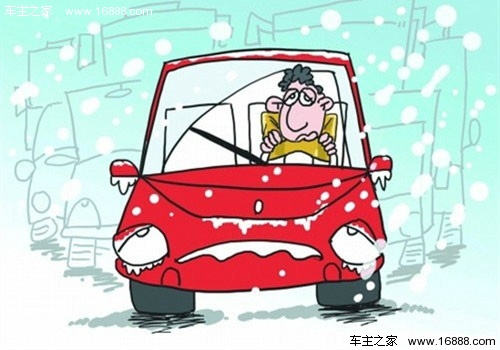
【Knowledge of Car Owners】With the advent of the cold winter, many car owners have encountered troubles that the vehicle is difficult to start. Sometimes even if it is started, the engine will vibrate severely, and even stall, which affects normal driving. In fact, whether it is winter or summer, when the cold car starts, you should carry out "warm-up exercises". Below, we will introduce the reasons and precautions for the difficulty of starting the vehicle in winter for the riders.
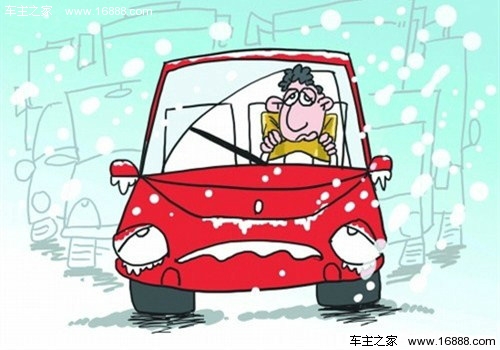
Reasons why vehicles are difficult to start in winter

1. The fuel injector is dirty.After the vehicle has been driving for a period of time, due to the entry of external dust and the chemical reaction during the combustion process, some colloids are easy to adhere to the fuel injectors. These colloids will block the normal fuel injection volume and affect the sensory sensitivity of the fuel injectors. The gasoline atomization is not good, so that the ignition is delayed, and the car is difficult to start.
2. The battery power is insufficient.The most immediate effect winter has on a fa
【Knowledge of Car Owners】With the advent of the cold winter, many car owners have encountered troubles that the vehicle is difficult to start. Sometimes even if it is started, the engine will vibrate severely, and even stall, which affects normal driving. In fact, whether it is winter or summer, when the cold car starts, you should carry out "warm-up exercises". Below, we will introduce the reasons and precautions for the difficulty of starting the vehicle in winter for the riders.
Reasons why vehicles are difficult to start in winter
1. The fuel injector is dirty.After the vehicle has been driving for a period of time, due to the entry of external dust and the chemical reaction during the combustion process, some colloids are easy to adhere to the fuel injectors. These colloids will block the normal fuel injection volume and affect the sensory sensitivity of the fuel injectors. The gasoline atomization is not good, so that the ignition is delayed, and the car is difficult to start.
2. The battery power is insufficient.The most immediate effect winter has on a family car in town is the battery. At low temperature, the power consumption of the car will be significantly greater than in other seasons, and the battery capacity will also decrease due to the low temperature environment. The battery that has been used for a long time will have a low initial starting voltage, such as dirty oil on the surface of the battery. Make the voltage output unstable and cause the vehicle body to vibrate. If winter is approaching, go to the franchise store to recharge the battery in time, or replace the new battery in time, which can effectively avoid this situation.
3. The fuel quality is low.Generally speaking, the viscosity of fuel is higher in autumn and winter, and it is not easy to evaporate, which has a certain impact on the heat energy during combustion. At the same time, at irregular gas stations, the quality of fuel is not guaranteed, resulting in insufficient power. Therefore, it is recommended that car owners choose regular gas stations to refuel, and do not be greedy for cheap fuel.
4. Carbon deposits on the throttle valve.When starting, the fuel is too thin, the fuel supply is poor, and the fuel will wet the spark plug, and it cannot start normally. This is because the fuel is injected on the carbon deposit on the valve port. The saturated state causes the fuel to flow into the cylinder in a liquid state, causing pooling on the upper part of the cylinder piston. When the piston moves up and down, the fuel is thrown and splashed on the electrode of the spark plug, making it unable to work normally and failing to start. If the above situation occurs, it means that your car needs to be thoroughly maintained, and the carbon deposits on the intake duct, throttle valve and cylinder should be removed.
5. Oil flow is blocked.This is more obvious in northern cities where the temperature is particularly low. In winter, the viscosity of the engine oil will increase accordingly, and the oil flow will become more and more difficult, which will increase the resistance of the engine, which makes it difficult for the car to start cold in winter. In this case, the emergency solution is to put the car in a warm environment, and it can start normally after a period of time. But if you want to solve it completely, it is best to go to a franchised store for a professional winter maintenance, and replace the appropriate engine oil according to the local conditions.
6. The exhaust pipe is frozen.Exhaust pipe freezing mainly occurs in those car owners whose homes and units are relatively close. Due to the low frequency of use of the car, the water vapor after the combustion of the engine froze on some parts of the exhaust pipe, and the short drive was not enough to melt the ice, and more ice formed after a night. Over time, it will affect the starting and exhaust of the vehicle.
Vehicles need to be warmed up before starting in winter
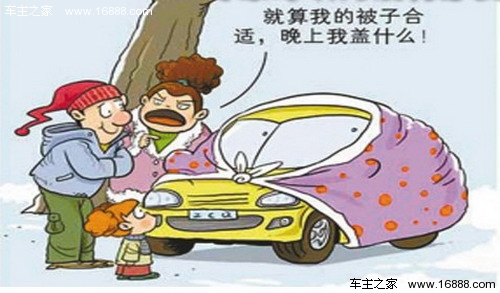
Not warming up the vehicle before starting the vehicle has a great impact on the engine. Because the car has been parked for a long time, the oil inside the engine will flow back into the oil pan at the bottom of the engine. When starting the engine after a long period of non-use of the vehicle (such as overnight), the upper half of the engine is in a state of lack of oil and lack of lubrication. The correct way to warm up the car is to start the engine and then go on the road 30 seconds to one minute later. Do not drive at high speed within 3 kilometers, try to keep the engine speed not exceeding 3000~3500 rpm, after the engine temperature rises to the normal operating temperature, you can drive at high speed under the condition of observing traffic rules and safety. If you try it early, the intense wear on the engine and gearbox cannot be recovered.
In addition, it must be very soft and slow when starting. On the one hand, this is to make the load of the engine as small as possible when it has not reached the normal operating temperature. Engine, tire and safety benefits. When starting off, put in a low gear, slowly lift the clutch pedal, and lightly step on the accelerator pedal.
Precautions for driving in winter
1. Pay attention to defogging.In cold winter, the temperature difference between the inside and outside of the car is large, and the fog on the car glass will bring a lot of trouble to driving, especially the front windshield and the front left and right windows. Therefore, it is particularly important to keep the glass clear when driving in foggy weather in winter, and the glass should be cleaned before travel. Many friends have used the air conditioning system to defog. The usual way is to turn on the air conditioner and refrigeration switch in the car, and the cold air will blow to the windshield to quickly "sweep away" the fog. In fact, in addition to cold air defogging, the use of hot air can also achieve the effect of defogging. It is generally recommended that users stop the car first, because the temperature difference between inside and outside will increase when the car is first opened, making the fog inside the glass bigger. However, if you turn it on for about half a minute, the fog will be evaporated, and it will not fog repeatedly.
2. Prevent freezing.In the cold winter, it is very common for the glass to frost and freeze, which is mainly caused by the large temperature difference between the inside and outside of the car. If you wash it with hot water, it will damage the car paint, and in severe cases, it may cause the glass to burst. Using cold water can also damage the paint, and frosting can be worse afterwards. The correct method should be to turn on the car heater, use a special deicing shovel, and slowly remove the ice along the same direction. It can also be removed with a special spray deicing agent, which will not damage the body and prevent the windshield and water accumulation from freezing. You can also open the windows for a few minutes before you go home and park your car at night, so that the temperature in the car can be properly lowered to avoid frosting on the windshield when driving in the morning.
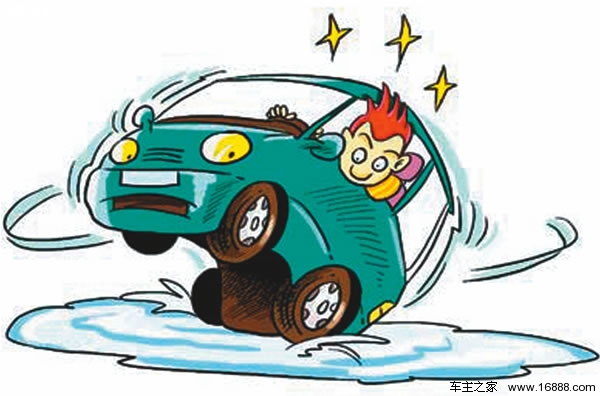
3. Starting and braking skills.The skills of starting and braking in winter driving are also very important, especially for novices or friends who drive manual transmission cars. When driving on icy roads, the friction between the tires and the road will be reduced, the adhesion will be reduced, and slipping or idling will easily occur. When driving a manual transmission vehicle, you must start gently and refuel, and slow down slowly in advance is the principle of driving safety in winter. When driving on icy and snowy roads, keep driving in a straight line as much as possible, and do not change lanes frequently. If you encounter snow or icy roads when turning, you must downshift and slow down to pass. Don't turn the direction in a hurry around the big bend, and brake in an emergency.
Related recommended reading:How to correctly choose and understand antifreeze in winter? Notice to car owners http://news.16888.com/a/2013/1217/311912.htmlWinter car strategy below 7 ℃ is recommended to replace special tires http://news.16888.com/a/2013/1218/312225.html