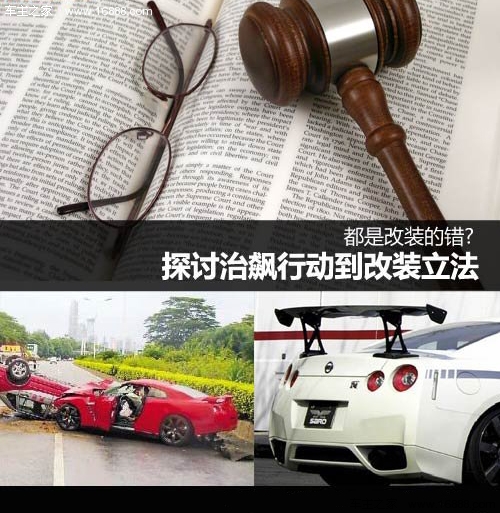
【The owner's family car knowledge】From the "70 yards" a few years ago to the recent "Shenzhen GT-R incident", every time a vicious traffic accident occurs, car modification will always be pushed to the forefront of public opinion. It is indeed self-inflicted, so the "GT-R incident" is a bit of a scapegoat. Why is the car modification that can obtain legal status abroad and become an important part of automobile culture, but it is so easy to be demonized in China?

■ Replay of Shenzhen's "Action Against Anti-Scourge"
At 3 o'clock in the morning on May 26, 2012, when Hou drove a red Nissan GT-R drunk while driving on Binhai Avenue in Shenzhen from east to west to Qiaocheng East section, it happened with two taxis driving in the same direction. The collision caused one of the taxis to catch fire and 3 people in the car died on the spot.

The incident has aroused widespread public concern. Starting from June 4, the Shenzhen traffic police launched a special rectification action called "Motion Control 01", and introduced 9 measure
【The owner's family car knowledge】From the "70 yards" a few years ago to the recent "Shenzhen GT-R incident", every time a vicious traffic accident occurs, car modification will always be pushed to the forefront of public opinion. It is indeed self-inflicted, so the "GT-R incident" is a bit of a scapegoat. Why is the car modification that can obtain legal status abroad and become an important part of automobile culture, but it is so easy to be demonized in China?
■ Replay of Shenzhen's "Action Against Anti-Scourge"
At 3 o'clock in the morning on May 26, 2012, when Hou drove a red Nissan GT-R drunk while driving on Binhai Avenue in Shenzhen from east to west to Qiaocheng East section, it happened with two taxis driving in the same direction. The collision caused one of the taxis to catch fire and 3 people in the car died on the spot.
The incident has aroused widespread public concern. Starting from June 4, the Shenzhen traffic police launched a special rectification action called "Motion Control 01", and introduced 9 measures under the premise of strictly defining standards to strictly investigate "racing racing" behavior. On June 16, the situation further developed. The Shenzhen traffic police launched a "diversion" operation against modified cars (Zhibiao 03), carried out a carpet search of parking lots throughout the city, registered sports cars in the parking lot, and dealt with suspected illegal actions. The modified vehicles were seized for vehicle inspection, and a total of 68 suspected of illegally modified vehicles were seized.

The above is all the ins and outs from the "5.26 GT-R traffic accident" to the recent "Zhibiao 03" operation in Shenzhen. And what we want to talk about is the investigation and punishment of modified cars in the "Zhi Biao 03" operation.
We have seen that the Shenzhen police investigated and dealt with “illegal modification of vehicles” in the “Zhihua 03” operation, and the Shenzhen police determined that the standard of “illegal modification of vehicles” was based on the current “Implementation Regulations of the Road Traffic Safety Law of the People’s Republic of China”, "The People's Republic of China Motor Vehicle Registration Measures" and other laws and regulations, but there is an objective factor: these current legal provisions are no longer adapted to the current status of modified vehicle management. For example, the simplest word, "modification", has not been mentioned once in the entire legal provision. We urgently need a modification management law and regulation that can adapt to the current situation, so here is the issue of whether legislation should be made for the current domestic modification industry.
Although I don’t want to popularize common sense from the perspective of people in the industry, I really want to say something here: In countries where the automobile industry is more developed, refitting exists as a huge automotive aftermarket. This should be a formality. A legal, orderly, and large-scale industry. SEMA in the United States is dealing with the Ministry of Commerce. Even the familiar Mercedes-Benz AMG was actually a refitting factory at first, but it was later acquired by Mercedes-Benz and became the official high-performance department of Mercedes-Benz. I believe no one says that the C63 AMG is an illegally modified car, right?

Since it is necessary to establish laws that adapt to the status quo for modification, let’s refer to Japan and look at the laws and regulations on modification in a highly developed country in the automotive industry, combined with the rims, suspension, enclosure kits, and body that are most frequently involved in domestic modification. In terms of color, car lights and intake and exhaust, see if there is anything we can learn from in our country.
● Take the modification regulations in Japan as an example, what are the worthy reference?

First of all, Japan's modification regulations have some major principles. For example, there is a floating standard for the weight, size, and load-bearing capacity of different classes of cars. If the standard is not exceeded after the modification, the major principles are met, and there is no need to report for vehicle changes. However, if the principle is exceeded, a declaration is required to change the registration content of the motor vehicle. The government will determine whether the modified vehicle meets the standards according to Japan's vehicle safety standards (JASMA standards). If it meets the standards, it can legally change its registration. If it does not meet the safety standards, it cannot legally go on the road.
In addition, in the Japanese refitting market, there are some "designated parts" that have been tested and certified by safety standards. If the owner refits these parts, there is no need to declare it, and it is completely legal to go directly on the road after installation. And if the modified part is not a "designated part", but as long as it is within the floating range of the general principle, there is no need to change the registration information.
■ Rim: No need to declare, completely legal.
In Japan, there are quite a lot of "designated parts" for rim modification, and the replacement of rims generally does not affect the "big principles" such as the weight and size of the vehicle. Therefore, most of them do not need to declare even if they are not designated parts. The modification is very convenient. There are no legal issues.
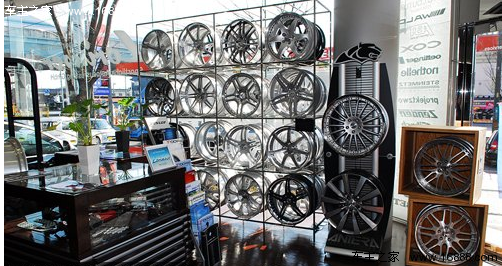
In China, whether it is the "Regulations for the Implementation of the Road Traffic Safety Law of the People's Republic of China" or the "Regulations of the People's Republic of China on Motor Vehicle Registration", I have not found clear regulations on the modification of rims. The management of the replacement of rims by the vehicle management offices in various places is even more varied and the standards are different. However, I saw this Weibo on the official Weibo account of the Shenzhen Traffic Police. The screenshots are shared with you, and you are also welcome to have a benign communication and discussion with our law enforcement officials.

What's interesting is that just after the Weibo in the picture above, I saw two very different statements on the Weibo of the Shenzhen Traffic Police, and I posted them to share with you.


As the official Weibo of the law enforcement officer, there will be inconsistent answers to the modification regulations. It can be seen that the improvement and implementation of modification regulations has become a very urgent matter.

I personally think that in terms of rim modification, it can be released as soon as possible. If you learn Japanese practices, relevant national departments can certify a batch of qualified parts in terms of safety and quality for everyone to modify and use. Or formulate clear and quantitative regulations like "The maximum diameter of the modified rim shall not exceed two inches from the original manufacturer".
There is another question worth mentioning: In the process of refitting the rims, everyone should take into account the uneven quality of the rims in our country and choose the products produced by regular manufacturers. An excellent lightweight modified rim not only looks great, but also has a very reliable quality. The reduction in unsprung weight brought about by lightweight makes the car lighter and even improves fuel consumption. Modification shouldn't be inferior, synonymous with copycat.
■ Suspension: The minimum ground clearance shall not be less than 9 cm.
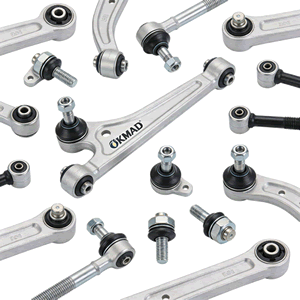
Regarding the modification of the suspension, there are also "designated parts" to choose from in Japan. Because the modification of the suspension system will affect the maximum load-bearing capacity of the car in some cases, if the modification parts that are not "designated parts" are used, and the standard of the general principle is exceeded, a change registration is required. It is worth noting that Japan also has regulations on the minimum ground clearance of the vehicle body: the minimum should not be less than 9 cm, and it may increase depending on the wheelbase and the length of the front and rear suspension. The specific standards are shown in the figure below.

In China, suspension modification is relatively loose, because it does not involve power, and the appearance is not significantly different from the original factory, so it is very safe to modify the suspension to improve handling. However, I believe that few friends modify the suspension alone without changing the rim and tires, so please refer to the previous one.