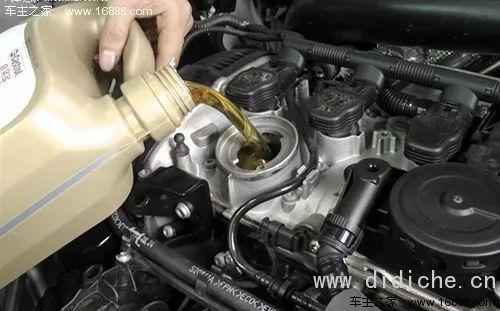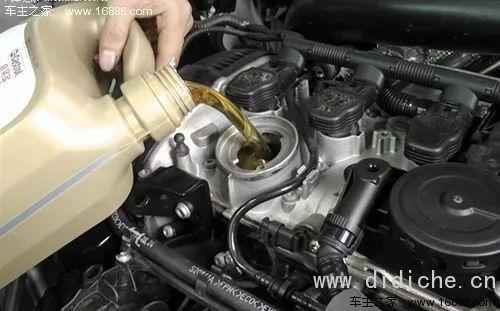
Engine oil has always been a lotcarA vocabulary familiar to users, what exactly is engine oil used for? What do those labels mean? What kind of oil is most suitable for which car? Today, the editor will give you a detailed explanation: (This article only uses oil for gasoline engines as the main discussion target)
● The role of engine oil:
The engine is the heart of the car. There are many metal surfaces that move in friction with each other in the engine. These parts move fast and the environment is poor. The working temperature can reach 400°C to 600°C.Under such harsh conditions, only qualifiedlubricating oilIn order to reduce the wear of engine parts and extend the service life, what requirements should a qualified lubricant meet? In other words, what are the six functions of lubricating oil?

1. Lubrication and wear reduction:pistonAnd the cylinder, the main shaft andbushThere is rapid relative sliding between them. To prevent the parts from wearing out too quickly, it is necessary to establish an oil film between the two sliding surfaces. The oil film of sufficient thickness separates the surfaces of the relatively sliding parts, so as to achieve the purpose of reducing wear.
2. Cooling down: the oil can bring heat back to the enginetankAnd then spread into the air to helpWater tankCool down the engine.
3. Cleaning and cleaning: Good engine oil can circulate the carbides, sludge, and wear metal particles on engine parts back to the engine oil tank, and wash the dirt on the working surface of the parts through the flow of lubricating oil.
4. Sealing and leak-proof: the oil can be inPiston ringA sealing ring is formed between the piston and the piston to reduce gas leakage and prevent the entry of external pollutants.
5. Anti-rust and anti-corrosion: Lubricating oil can absorb the surface of the parts to prevent water, air, acidic substances and harmful gases from contacting the parts.
6. Shock absorption and cushioning: When the engine cylinder port pressure rises sharply, the piston, piston chips, connecting rod andCrankshaftThe load on the bearing is very large. This load is transmitted and lubricated by the bearing, so that the impact load on it can buffer.
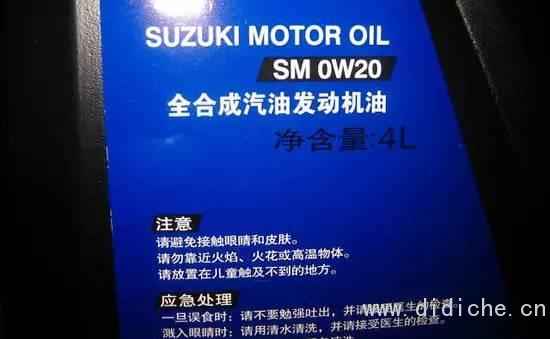
Engine oils currently on the market can be simply divided into mineral oils and synthetic oils due to their different base oils (vegetable oils are not counted because of their scarce production). Synthetic oil is further divided into: full and semi-synthetic. Fully synthetic motor oil is the highest grade.
The biggest difference between the two is that: synthetic oil uses a wider temperature, longer service life, and higher cost; the same oil film requirement, synthetic oil can be achieved with a lower viscosity, while mineral oil needs to be used compared to synthetic oil. Only thicker viscosity can meet this requirement. In the same working environment, synthetic oil has a much longer service life than mineral oil, so the cost is higher, but after comparing the number of oil changes, it is not much higher than mineral oil.
● Marking of engine oil:
The viscosity of lubricating oil is usually marked with SAE and other grades. SAE is the abbreviation of "American Society of Automotive Engineers" in English. For example: SAE15W-40, SAE5W-40, "W" means winter (winter), the smaller the number in front of it, the better the low-temperature fluidity of the oil, and the lower the ambient temperature available for use. The better the protection capability of the engine oil; the number behind the "W" (behind one horizontal line) is an indicator of the high temperature resistance of the engine oil. The larger the value, the better the protection capability of the engine oil at high temperatures.
(SAE) Applicable ambient temperature (°C)
5w resistant to external low temperature -30°C
10w resistant to external low temperature -25°C
15w resistant to external low temperature -20°C
20w resistant to external low temperature -15°C
30 Resistance to external high temperature 30°C
40 Resistance to external high temperature 40°C
50 Resistance to external high temperature 50°C
In this way, the applicable external temperature range of 5W-40 engine oil is from -30°C to 40°C; while the applicable external temperature range of 10W-30 engine oil is -25°C to 30°C.
● Classification of engine oil:
The series starting with "S" represents gasoline engine oil, the specifications are: SA, SB, SC, SD, SE, SF, SG, SH, SJ, SL, SM. The series beginning with "C" represent diesel engine oil, and the specifications are: CA, CB, CC, CD, CE, CF, CF-2, CF-4, CG-4, CH-4, CI-4. When the two letters "S" and "C" are present at the same time, it means that the oil is a gasoline/diesel universal type.

From "SA" to "SL", with each letter incremented, the performance of the oil will be better than the previous one, and there will be more additives used to protect the engine in the oil. The lower the letter, the higher the quality level, and most of the oil levels in international brands are above the SF level.
After reading the basic knowledge of engine oil, everyone must have a lot of questions. Let’s start answering questions below:
★Question 1: Is the top-level fully synthetic engine oil suitable for all cars?
So much has been said, the fully synthetic engine oil is indeed very good in performance and fluidity. Whether it is cold start in winter or in summer, it has excellent resistance to noise and high temperature, and the oil change interval is long, which can protect the engine to the greatest extent. But fully synthetic motor oil is not suitable for micro and small cars worth tens of thousands of dollars...
For tens of thousands of economical cars, because the engine processing accuracy is relatively low, the gap sealing between the cylinder and the piston ring is not the finest. This kind of engine often appears on the cars with lower car prices and is relatively viscous. The oil is used as a seal between the cylinder and the piston ring.
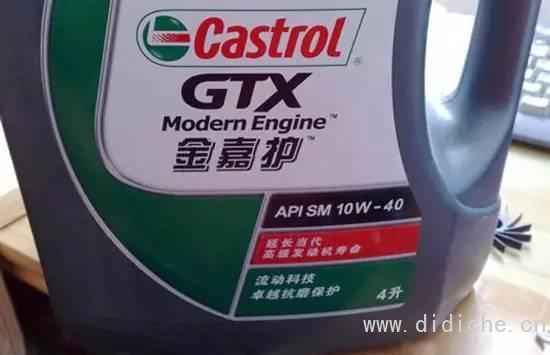
If you use a thinner fully synthetic engine oil, there will be some minor problems with the engine's sealing, and you will always feel powerless when driving. And after parking, most of the total synthetic will flow back to the oil pan, the lubrication and sealing of the engine are damaged, so the engine will suffer a lot of wear after getting up in the morning. If it is a relatively viscous medium-grade oil in this kind of engine, this problem will not occur.
Therefore, fully synthetic motor oil is a good oil, but it is not suitable for low-cost, economical car engines.
★Question 2: How to choose engine oil for supercharged engines? If you have brushed the computer, it is recommended to use fully synthetic engine oil
For ordinary turbocharged cars, the original engine oil is sufficient, but if you have brushed the computer, please read the following paragraph:
turbineSuperchargerBecause of workRotating speedToo high, any ball bearing can not withstand the strength of 100,000 revolutions per minute, so the main shaft is not connected with the ball bearing and the turbine body, but a floating design, the main shaft is floating in the oil, the turbine body and the main shaft The extremely narrow space in between is filled with flowing oil, which not only plays a role of lubrication, but also takes away impurities between the main shaft and the turbine part and plays a role of heat dissipation.
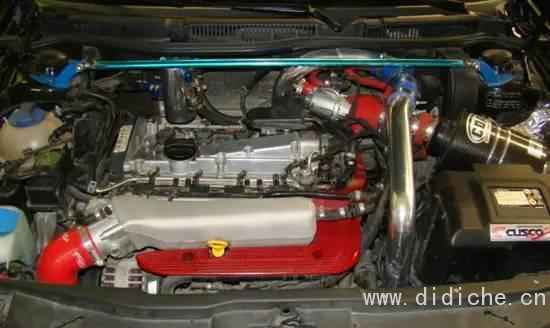
The problem lies here, still taking the Bora 1.8T as an example, the original factory 0.38bar boost value is generally between 100,000 and 150,000 revolutions per minute, and the original engine oil is fully capable of supporting this speed and heat dissipation. However, after brushing the computer, the boost value skyrocketed, and the turbine speed also skyrocketed to 200,000 to 300,000 rpm. At this time, the first thing that could not be carried was the original engine oil.
Because the original engine oil is not a top-level fully synthetic engine oil, the oil has a high viscosity and poor fluidity, so when the main shaft rotates at a super high speed, the oil cannot provide the required lubrication and heat dissipation, even some friends are outside For maintenance, the oil level is not even as good as the original oil. At this time, there will be a problem of oil burning, that is, the aforementioned turbine is damaged.
Fully synthetic engine oil is relatively thinner, with better lubrication and heat dissipation. After the turbine speed is increased, this thinner engine oil can flow 100% to the lubricated part, so there will be no problems mentioned above.
★Question 3: Why do German cars generally change their oil every 7500-10000 kilometers, while Japanese cars change their oil every 5000 kilometers?
This is what I said before, the relationship between mineral oil and synthetic motor oil. The original engine oil of Japanese cars (the price is less than 300,000) is generally mineral oil, and the oil change interval should not be too long. Generally, it needs to be replaced when it is more than 5,000 kilometers. (Of) generally use semi-synthetic engine oil, so the oil change interval may be about 7500-10000 kilometers.
For German cars with a price of about 150,000, the original engine oil is basically semi-synthetic oil, so the natural oil change interval will be 2500 kilometers longer than that of Japanese cars of the same grade. The original engine oil for many German cars with a price of more than 200,000 yuan is fully synthetic, and the oil change period theory can exceed 10,000 kilometers.
★Question 4: Why do high-end cars burn a little bit of engine oil?
High-end cars generally use fully synthetic motor oils, and even many super sports cars use the extremely fluid 0W-50 series of super racing motor oils. The better fluidity of the oil means that the viscosity is thinner. The benefits have been mentioned a lot, and there is a downside because it is thinner, so the ratio of the oil flowing into the combustion chamber from the cylinder and the piston ring is greater. So engine oil consumption is naturally much higher than those of family cars.
It is inevitable that high-end cars will burn some oil, unless you don't use high-end oil. However, if the consumption exceeds half a liter of oil per 2000 kilometers, it is also a problem, not the normal consumption.
★Question 5: Just change the oil, can it be filtered without changing the machine?
Engine oil is not only lubrication, but also very important function is to take away the dirt inside the engine, these dirt is filtered out by the machine filter, if you change the oil without changing the machine filter, the dirt can not be completely removed, so it is equal to There is no point in changing the oil. To change the oil, the filter must be changed. This is a dead rule.
★Question 6: The oil is all black after changing?
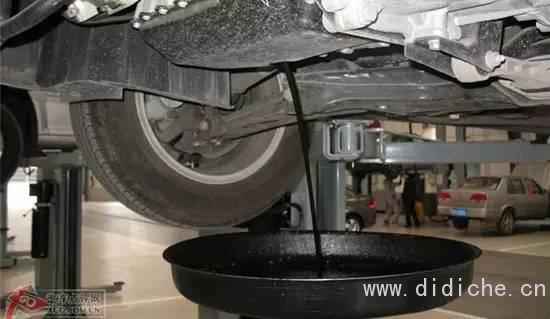
Engine oil mainly lubricates various parts inside the engine, especially the most important for the lubrication of pistons and cylinder walls. In this, the product of combustion is a dark jelly, so the oil has changed color since it was injected into the engine on the first day of use. NS. However, the normally used engine oil should be dark brown. If it is really pure and inky black, it is also a problem. It is likely that the oil change interval is too long.
★Question 7: Can engine oils of different brands be mixed?
The engine oil additives of each brand are different. Mixed use may cause deterioration of the chemical components. Mixing is not recommended.
★Question 8: What are the particularities of car owners across the country when using motor oil?
In the Northeast, Xinjiang, and Tibet regions, it is recommended to use relatively sparse low-temperature resistant 5W series engine oil. In extremely cold areas such as the North and South Arctic Circles, the engine oil will even use 0W series.
In North China, East China, and South China, it is recommended to use normal 5W-30/40 or 10W-30/40 oil;
In extremely hot areas like Hainan, it is recommended to use 40 or 50 oil, high temperature resistance is a must;
● Conclusion:
The use of engine oil is very interesting, but don’t think it’s too complicated. You don’t have a bottom line. Just use the original engine oil provided by 4S shops or brand specialist workshops to ensure that there is no problem with your engine.

If you need to provide special protection to the engine or modify the engine, it is recommended that you change to a higher-grade engine oil immediately, and feel confident that the original engine oil matches the characteristics of the original engine and is not suitable for the modified engine.