carBrand marketing has always done only two things. The first thing is to "attack the heart", and the second thing is to "brainwashing". Loss of rational decision-making. The same product, made in Germany and made in India, do everyone have the same perception? Certainly not, "good quality, safety, durability, craftsmanship, Yan Jin, etc.", even if there is no concrete product, there will still be such words in the mind, which is "brainwashing."

From the perspective of automobile consumers, with the rapid development of the automobile industry for more than a decade, consumers have become more and more rational. The consumption of cars is actually a very purposeful behavior. Most people will not buy a car on a whim or hot-headed, especially for Chinese consumers. Although the production cost and purchase cost of automobiles continue to decrease, they are still large commodities in ordinary household expenditures, and entanglement and hesitation are indispensable. , Perplexity and regret.
Similar to the consumption behavior of buying a watch, there are two core requirements for car consumers to interact with the brand. First, decision-making needs, to provide decision-making support for the purchase behavior; second, the need for self-value realization, no purchase behavior, purely Likes, hobbies, and realization of a certain sense of identity.
The younger generation of car consumers has long become an indisputable fact. Data shows that in recent years, the proportion of “post-80s” and “post-90s” among new car buyers has increased from 38% in 2010 to 53% in 2013, the first time. It surpassed the "post-70s"
carBrand marketing has always done only two things. The first thing is to "attack the heart", and the second thing is to "brainwashing". Loss of rational decision-making. The same product, made in Germany and made in India, do everyone have the same perception? Certainly not, "good quality, safety, durability, craftsmanship, Yan Jin, etc.", even if there is no concrete product, there will still be such words in the mind, which is "brainwashing."
From the perspective of automobile consumers, with the rapid development of the automobile industry for more than a decade, consumers have become more and more rational. The consumption of cars is actually a very purposeful behavior. Most people will not buy a car on a whim or hot-headed, especially for Chinese consumers. Although the production cost and purchase cost of automobiles continue to decrease, they are still large commodities in ordinary household expenditures, and entanglement and hesitation are indispensable. , Perplexity and regret.
Similar to the consumption behavior of buying a watch, there are two core requirements for car consumers to interact with the brand. First, decision-making needs, to provide decision-making support for the purchase behavior; second, the need for self-value realization, no purchase behavior, purely Likes, hobbies, and realization of a certain sense of identity.
The younger generation of car consumers has long become an indisputable fact. Data shows that in recent years, the proportion of “post-80s” and “post-90s” among new car buyers has increased from 38% in 2010 to 53% in 2013, the first time. It surpassed the "post-70s" in the original market. According to the survey data of Autohome, the post-90s generation without a car currently accounts for as much as 80%. As the post-90s slowly move into society and enter jobs, they will become the main force of future automobile consumption together with the post-80s who have a strong demand for car replacement.
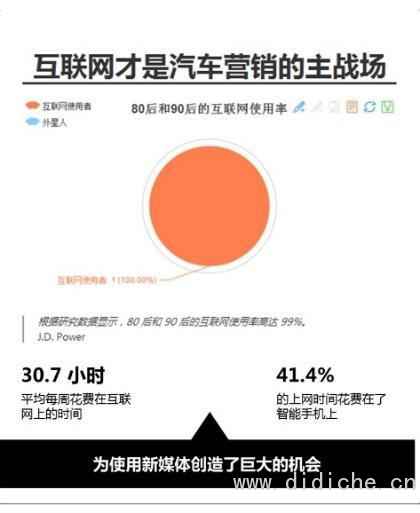
Ninety percent of car consumers said that new media is their main source of information in the process of buying a car, while only 51% of new car owners use traditional media as their main source of information. JDPower pointed out that 6.68% said they visited vertical websites/forums during the car purchase process, 53% visited portal websites, and 49% used search engines.
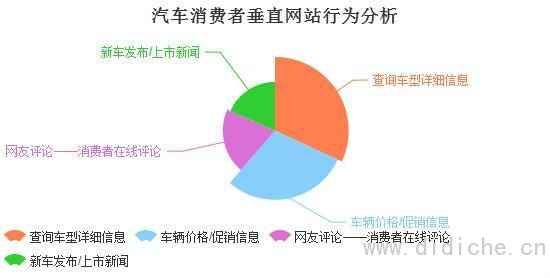
At the same time, vertical websites are also rated as the most influential media for purchase decisions by new car buyers. These car buyers mainly query vehicle details (52%), vehicle price/promotion information (48%), netizens' comments—consumer online reviews (33%), and new car launch/market news (30%) on vertical websites. -Less than 30% of car buyers find such information through portals or search engines.
And WeChat, as the most frequently used new media channel, is used 33 times a month by car buyers on average. It is worth noting that the function of WeChat as an automobile marketing channel is not to obtain information such as car models or prices (only 3%), but more to participate in viral word-of-mouth communication activities of automobile brands. Post-90s car buyers are willing to share purchase information with others through WeChat (33%), and 69% of the sharing content is positive. Therefore, new media represented by WeChat has relatively low direct influence on purchasing decisions. Car buyers use WeChat more to collect and share information in fragmented time.

As for car manufacturers, only 17% of car buyers follow the official WeChat or Weibo of car manufacturers to obtain vehicle maintenance information (64%), new car releases (52%) and driving skills (42%). But nearly half of car buyers (47%) reposted the content of the auto manufacturer's WeChat or Weibo to others. Among all age groups, post-90s car buyers pay the most attention to the official WeChat or Weibo of auto manufacturers (26%). Although the penetration rate of the auto manufacturer’s website is relatively low (35%), for consumers who use the auto manufacturer’s website during the car purchase process, it has the greatest influence on the new car purchase decision, which means that the official channels of the auto manufacturer are not Great, but the conversion rate is extremely high, reflecting the official extremely high flicker ability.
In the final purchase process, the churn rate (33%) of non-online new car owners (not using the Internet at all during the purchase process) is significantly higher than the churn rate of online new car owners (using the Internet to find, negotiate or buy new cars) (22%) ). It can also prove that consumers who use Internet channels to collect information before buying a car are more purposeful and autonomous, and marketing brainwashing is more successful.

Final thoughts:Can the sub-answer model become a new battlefield for automobile marketing?
We can summarize the characteristics of FenAn, Zhihu live and other cases as follows: professional, social, and entertainment-based social question and answer mode. For the automotive industry, in fact, such websites have already eaten the first crab. Here is the main analysis of Chewun.com under Renren.
Chewen.com is affiliated to Renren Company and is a real-name professional car question and answer site based on SNS. It was launched in April 2014. It not only focuses on information release in the automotive field, but also combines the interactivity and authenticity of the Q&A community. In 2012, the car homepage product was released, covering almost all car brands and car-related shopping guide, test drive, self-driving, modification, used car and other fields. Users can get instant, professional and accurate car content on this platform. And the car manufacturers that enter the platform can publish relevant product information through the car homepage and interact with users who follow the brand, so that it can be delivered to users more quickly and conveniently. Through user relations, interactive communication and word-of-mouth communication mechanisms, it has become an interactive platform for automotive soft marketing.
Chewen.com is not only an SNS website, but also a social network and a vertical automobile website product. Chewen.com is also doing Q&A, which is also an interactive model. It builds a social media communication platform. Another important point is that it is fully connected with Renren. This is with Fenda and Guohu, Zhihu live and Zhihu same.
From my experience of Chewen.com, the content structure and sections of Chewen.com have been relatively complete, but the output of content and user interactions are not ideal from the posts. Judging from browsing the "Topics Daquan" section, the last posting time of the sections of "Hot Topics" and "Buying a Car Help", which are more interactive with users, stopped in December 2015. The only one that is still active is the consulting section. Basically it is updated every day. But as we all know, the content produced by consulting is more about website editors than users. In this way, I can't help but ask superficial questions: What happened to the user operations of Chewen.com? Due to the lack of more information, I don't know the specific situation, but it can be concluded that at least on the interactive Q&A platform on the website, the amount of user activity is really not high.
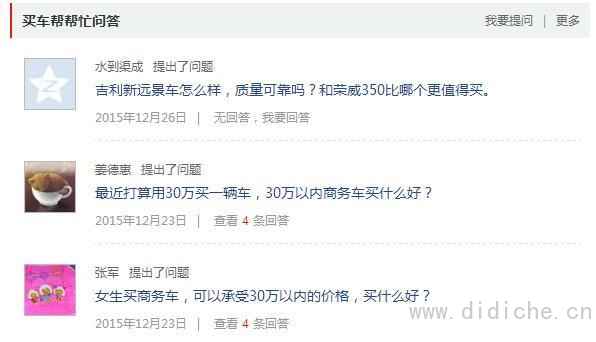
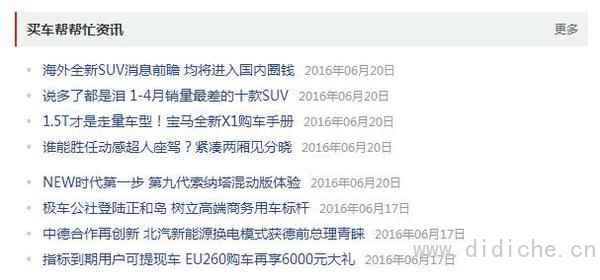
Chewenwang has great ambitions, and I prefer to think that it has two ambitions. The first ambition is "SNS car social question and answer platform." From the above analysis of automotive media channels, it can be seen that it is an automotive vertical website, a Q&A community, and I think it can form a car-based "live software" as long as it is willing. The second ambition is "integrator of automotive services." In addition to the content output of car manufacturers, buying cars, car use, etc., Chewun.com has integrated more than 500 car experts to "check out in the room", and also integrates in-car hazardous substance monitoring, healthy car monitoring and other services directly with vehicle purchase decisions. stand up. Maybe later maintenance, modification, repair, 4S shop and other services are integrated into the platform. Is Chewon.com the Internet celebrity in the automotive industry "dividing"? However, the answer is not. Chewen.com, as a professional automotive vertical website, limits the breadth and depth of its content extension. There are many car-derived concepts, but they are still insufficient. Conventional derivations, such as maintenance, modification, driving skills, branding, and other topics, are more inclined to a certain section of Zhihu, and the base is difficult to compare with the more entertaining and professional sub-answers or notification live. As for Internet celebrities and big Vs in the automotive industry, their awareness and influence are also limited. Auto marketers know that, taking new media channels as an example, there are really appealing and marketing large numbers. Are their own traffic and resources willing to unconditionally introduce them to the car's platform for monetization?
What about the content output? For the automotive industry, many novice questions are often meaningful to the questioner, but the answerer feels boring. Such problems will also affect the content quality of social Q&A sites. Zhihu uses professional social Q&A sites as a selling point and will try to avoid these problems. Where is Chewon.com? Do you want to locate a professional car Q&A, or will you not refuse? People may be more excited when they first come into contact with social Q&A websites. Showing their knowledge reserves in front of acquaintances will obviously make people full of fun. In the early stage, it may be possible to compromise in order to accumulate users, but in the long run, positioning determines the content output, and it is impossible to have both. In order for the respondent to "build prestige" or realize the realization of knowledge, whether it must be "high-quality questions, it is best to arouse your desire to answer or even not answer uncomfortable questions". This is undoubtedly a question that Chewun.com needs to consider.