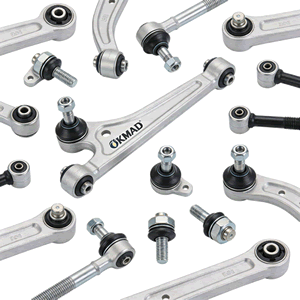
The damage of vehicle parts is generally caused by multiple factors such as load, force, speed, frequency, temperature, direction of rotation, etc. The damage to the parts related to the driver’s technical level can be roughly divided. There are two types, most of which are fatigue fracture or fatigue materials that are damaged by impact under bending or torsion.
1. Reverse
General torsional fatigue damage mainly occurs in the transmission parts. The reason for the damage: The main reason is that the parts bear excessive load and continuous torsion force, and the torsional fatigue damage occurs when the parts are increased to the limit of the strength of the machine.The parts that have this kind of damage are commonTransmission shaft,Half shaft,Transmission systemMechanical parts and elastic torsion bars, etc. The damage of this kind of parts means that the parts have a large longitudinal stress when the parts are applied with strong torsion force and torsion. The material is repeatedly stretched and compressed, causing cracks, and the cracks are generally 45°. For shafts of high-strength materials, there are horizontal and vertical cracks.
Common torsion damage parts such as half shafts, the general cracking starts from the root of the spline to the shaft center. In the case of semi-axis fracture, “coastal sand patterns” can be seen on the fracture surface, and the fracture is obviously at 45°.Broken half shaft, that iscarWhen overloaded or stuck in a mud pit in a bad road environment, the driver quickly repeatedly accelerates in low gears or reverse gears without restriction, or rushes out of the mud, there is a possibility of this kind of mechanical damage.
2. Bending
The cause of general bending fatigue damage: It is mainly caused by continuous use under overload or fatigue bending and poor straight
The damage of vehicle parts is generally caused by multiple factors such as load, force, speed, frequency, temperature, direction of rotation, etc. The damage to the parts related to the driver’s technical level can be roughly divided. There are two types, most of which are fatigue fracture or fatigue materials that are damaged by impact under bending or torsion.
1. Reverse
General torsional fatigue damage mainly occurs in the transmission parts. The reason for the damage: The main reason is that the parts bear excessive load and continuous torsion force, and the torsional fatigue damage occurs when the parts are increased to the limit of the strength of the machine.The parts that have this kind of damage are commonTransmission shaft,Half shaft,Transmission systemMechanical parts and elastic torsion bars, etc. The damage of this kind of parts means that the parts have a large longitudinal stress when the parts are applied with strong torsion force and torsion. The material is repeatedly stretched and compressed, causing cracks, and the cracks are generally 45°. For shafts of high-strength materials, there are horizontal and vertical cracks.
Common torsion damage parts such as half shafts, the general cracking starts from the root of the spline to the shaft center. In the case of semi-axis fracture, “coastal sand patterns” can be seen on the fracture surface, and the fracture is obviously at 45°.Broken half shaft, that iscarWhen overloaded or stuck in a mud pit in a bad road environment, the driver quickly repeatedly accelerates in low gears or reverse gears without restriction, or rushes out of the mud, there is a possibility of this kind of mechanical damage.
2. Bending
The cause of general bending fatigue damage: It is mainly caused by continuous use under overload or fatigue bending and poor straight line calibration. When the car is running on poor road conditions, the driver's operation is rough, and the impact of using the vehicle is most likely to cause the gear to bend and damage due to overload.Common asRear axleThe damage of the gear teeth of the secondary reduction gear is the result of the combined effect of the impact force and the stress caused by the excessive load. Carefully check the surface smoothness of the damaged parts, and you can find the early fatigue cracks, and the cracks can be clearly seen. The whole situation that happened. Tortoise cracks are also called "coastal sand patterns", just like the patterns left behind after a coastal sand beach is washed by tide water. The appearance of coastal sand patterns indicates that the cracks are repeatedly deformed by external forces, and the cracks are gradually expanding and the parts are damaged. This kind of damage often occurs when the car is overloaded or the driving operation is rough, and the machine parts are impacted when jumping or driving away from the muddy pit.
3. Impact
Often due to overloading or high-speed driving on poor roads, the mechanical parts are damaged due to impact. For example, the cause of differential damage is usually caused by idling and skidding in mud, sand or snow. When the wheel on one side of the car stops rotating and the wheel on the other side is idling, the planetary gear of the differential continuously rotates at a high speed; the wheel idling for a long time, the parts are overloaded and overheated, and the lubrication is insufficient; causing the planetary gear to heat up Glue on the cross shaft, resulting in continuous damage to various parts of the differential, and may cause greater risk of damage to the parts.
For new cars or vehicles that have not passed the "run-in period", the driver has insufficient experience and does not comply with the requirements of the new car. When the engine is short of water, poor lubrication, and the vehicle is used under overload or over-limit (vehicle speed) conditions, the engine will overheat.Overheated engine, due to thermal stress, occurspistonThe impact of the stuck cylinder or the up and down movement of the piston causes damage to the engine cylinder or other mechanical parts. If the vehicle is not maintained on a regular basis and has been out of repair for a long period of time, it will cause misalignment of the matching gap of the mechanical parts, and under too loose conditions, improper use will result in the impact or blow of the piston, causing the engine to pull or ram the cylinder, etc. Should not be ignored.

![Causes of damage to vehicle parts[汽车维修知识]](/view/img/nopic.png)