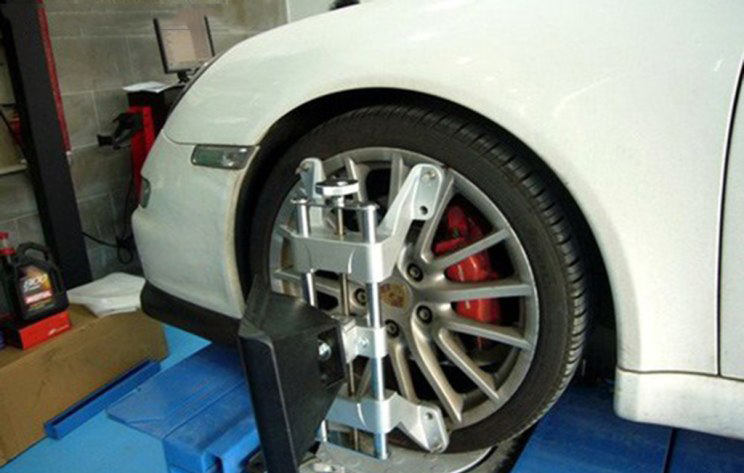
Due to the four wheels of the vehicle,
Steering machineThe installation between the front and rear axles should have a certain relative position, which is a standard value established by the manufacturer. What is four-wheel alignment? The installation to adjust and restore this position is four-wheel alignment.
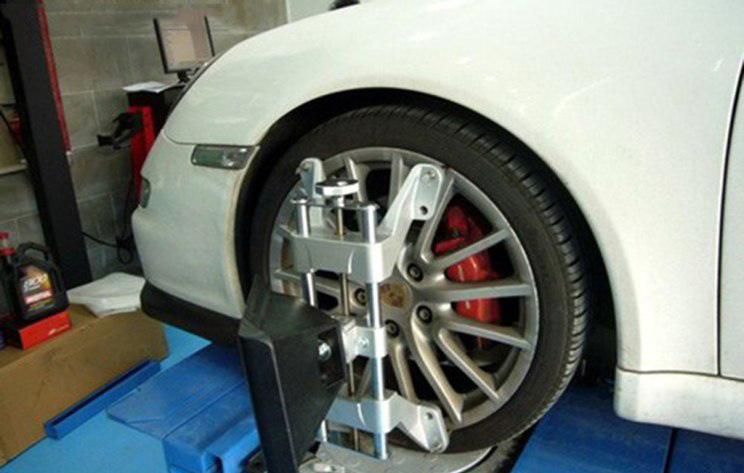
1. Under what circumstances do four-wheel alignment?
1. The driving performance of the vehicle is affected (the driver feels the most direct deviation, and it is counted if the direction is not automatically returned)
2. Chassis and suspension damage caused by accident
3.
tireAbnormal wear occurs (but also consider whether the abnormal wear is caused by abnormal tire pressure. Under normal circumstances, too high tire pressure will aggravate the wear in the center of the tread, while too low tire pressure will aggravate the wear on both sides of the tread. Wear; if there is eccentric wear on one side, it may be a deviation of the camber angle; abnormal wear caused by toe will be mentioned below)
4. The axle and suspension parts have been removed
2. What data is adjusted for four-wheel alignment?
For the front wheel responsible for vehicle steering, the positioning is more complicated. The positioning parameters include kingpin caster, kingpin inclination, wheel camber, and toe, while the positioning parameters of the rear wheel are mainly toe and camber.
1. The main pin is tilted backward
Function: straight line stability, turning back to normal
Viewed from the side of the vehicle, the kingpin axis (the central axis of the wheel steering) is not completely perpendicular to the ground, but slightly inclined backwards. The angle between the kingpin axis and the v
Due to the four wheels of the vehicle,
Steering machineThe installation between the front and rear axles should have a certain relative position, which is a standard value established by the manufacturer. What is four-wheel alignment? The installation to adjust and restore this position is four-wheel alignment.
1. Under what circumstances do four-wheel alignment?
1. The driving performance of the vehicle is affected (the driver feels the most direct deviation, and it is counted if the direction is not automatically returned)
2. Chassis and suspension damage caused by accident
3.
tireAbnormal wear occurs (but also consider whether the abnormal wear is caused by abnormal tire pressure. Under normal circumstances, too high tire pressure will aggravate the wear in the center of the tread, while too low tire pressure will aggravate the wear on both sides of the tread. Wear; if there is eccentric wear on one side, it may be a deviation of the camber angle; abnormal wear caused by toe will be mentioned below)
4. The axle and suspension parts have been removed
2. What data is adjusted for four-wheel alignment?
For the front wheel responsible for vehicle steering, the positioning is more complicated. The positioning parameters include kingpin caster, kingpin inclination, wheel camber, and toe, while the positioning parameters of the rear wheel are mainly toe and camber.
1. The main pin is tilted backward
Function: straight line stability, turning back to normal
Viewed from the side of the vehicle, the kingpin axis (the central axis of the wheel steering) is not completely perpendicular to the ground, but slightly inclined backwards. The angle between the kingpin axis and the vertical is the caster angle of the kingpin.The existence of the kingpin makes the wheel contact with the road when turning
tireThe left and right sides of the tread and the sidewall of the tire will be squeezed and deformed, generating a reverse force, causing the wheel to return to its own direction. The greater the caster angle of the kingpin, the better the driving stability of the wheel and the greater the return effect. Obviously, but turn when turning accordingly
steering wheelThe harder it is.
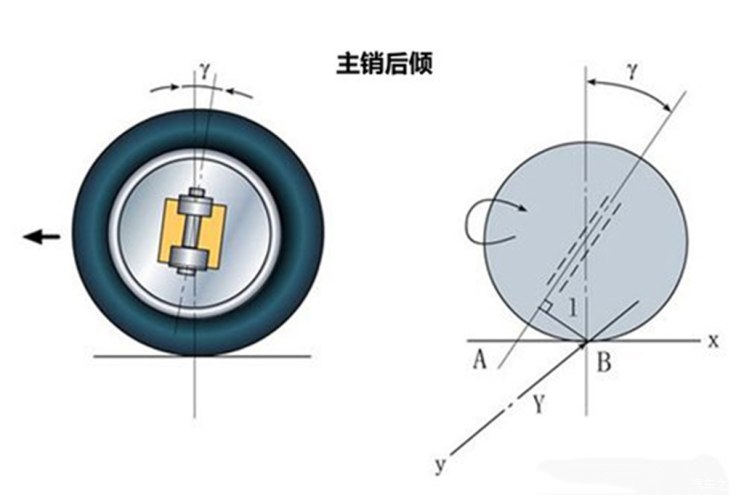
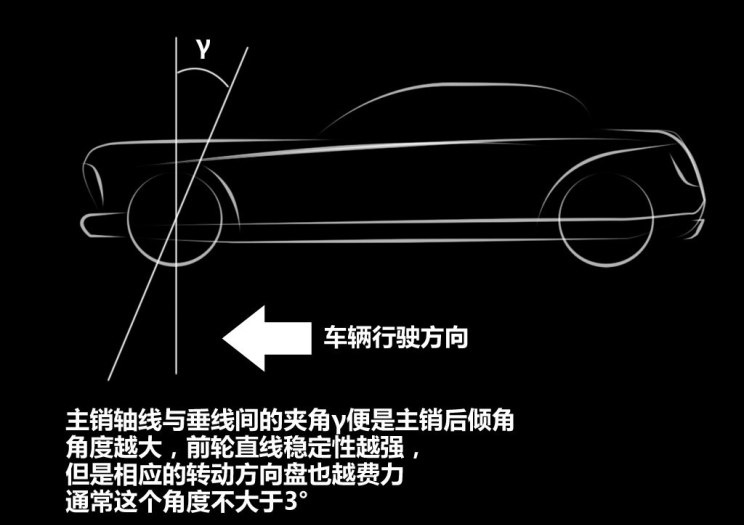
On most vehicles, the caster angle of the kingpin does not exceed 3°, but the caster angle of the kingpin varies with the vehicle's attitude and driving state, and is related to the travel of the suspension and the state of the wheels at the time. For example, during emergency braking, the vehicle The caster angle of the kingpin may be close to zero or even negative.Therefore, many vehicles will find that the straight-line driving stability of the vehicle becomes worse in the case of emergency braking (even if there is
ABS).
2. The main pin is tilted inward
Function: stability, turning back to normal
Seen from the front (that is, in the horizontal plane), there is also a certain angle between the axis of the vehicle kingpin and the vertical, and the upper end is inclined inward. This is the inclination of the kingpin, and the angle between the axis of the kingpin and the vertical is called Kingpin inclination angle.
Due to the inclination of the kingpin, the tendency of the wheels to turn is that the wheels move downward as a whole. However, since the pavement roads we drive on every day are hard pavements, the effect presented is: when turning, the wheels will resist Gravity lifts the front of the car, and when the steering force disappears, the wheels will automatically return to the right under the action of gravity. The greater the inclination angle of the kingpin, the more obvious this return effect is, but an excessively large angle will also cause excessive wear of the tire. This angle is usually between 5-8°.
King pin inclination and king pin inclination are also designed to provide normalizing force and driving stability, but the difference between the two is that the corrective force of king pin inclination has nothing to do with driving speed, while the role of king pin inclination is The higher the vehicle speed, the more obvious the effect. Therefore, when driving at high speed, the stability and return of the kingpin’s caster dominates, while at low speed, the role of the kingpin’s inward tilt plays a dominant role.
3. Wheel camber (negative camber)
Function: Enlarge the tire contact surface and offset the adverse effects
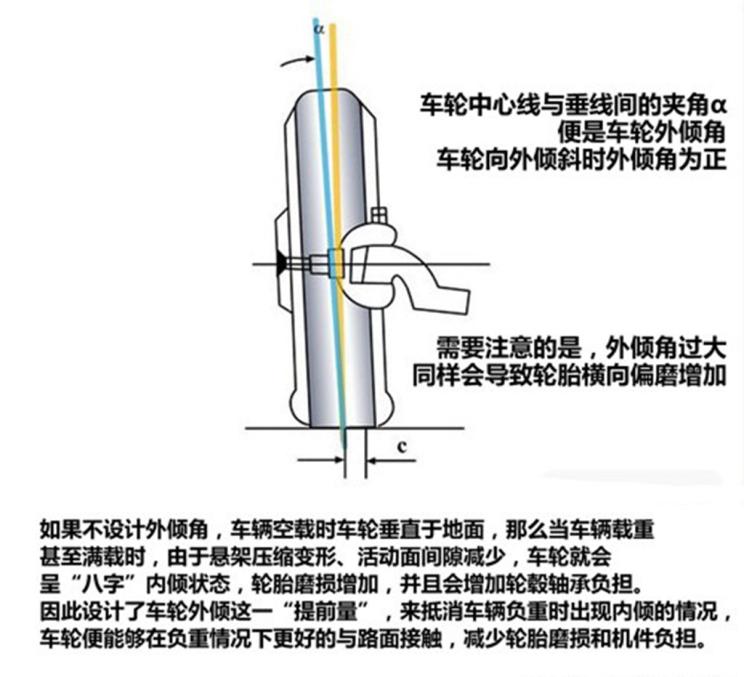
As the name implies, wheel camber is the wheel's tilt from the center line. The angle between the wheel's rotation plane and the longitudinal vertical plane is the wheel's camber angle.
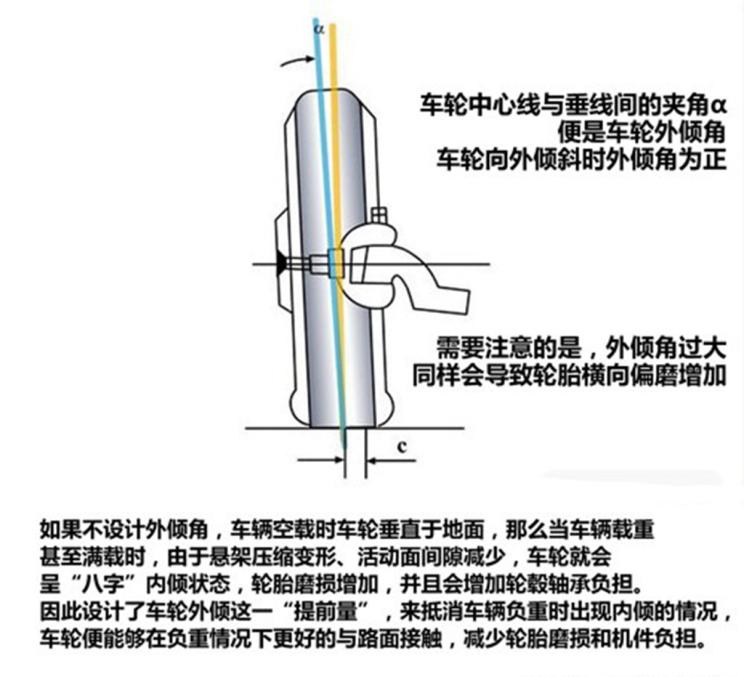
If the vehicle keeps the wheels perpendicular to the road surface under no-load conditions, when a load is added or even fully loaded, the wheels will assume a "eight" "inward" state due to the compression and deformation of the suspension stroke and the reduction in the clearance of the active surface. , Increase tire wear, and
Wheel hubBearings cause a greater burden. In order to reduce this effect, people have designed a design-the advance of "wheel camber" to offset the occurrence of "inclination", so that after the vehicle is loaded, the wheels can be better. The angle of contact with the road surface reduces the burden of eccentric wear and bearing. However, an excessively large camber angle will also cause the lateral eccentric wear of the tire to increase. The "tire gnawing" mentioned by many car owners is related to the unreasonable setting of the original wheel camber angle.
However, not all vehicles are designed with wheel camber. We have seen that many high-performance cars, racing cars and modified cars are set to the "bright" "negative camber" (inward) state, because high-performance vehicles More importantly, considering the effect of the centrifugal effect when the vehicle is cornering at high speed, when the wheel is driving at a high speed in a curve, the tire deforms due to the centrifugal effect and has a tendency to camber, so that only the outside of the tire can contact the road surface. Therefore, engineers use the initial "inward tilt" setting to offset this adverse effect, so that these high-performance vehicles can make more use of the middle of the tire or even the inner tread in the curve, increase the contact area, and improve the cornering. The limit.
4. Toe (front exhibition)
Function: to offset the adverse effects caused by the wheel's camber (inward)
Although the wheel camber offsets some of the adverse effects of the vehicle when the vehicle is loaded, the design itself has drawbacks: the camber setting makes the wheels on both sides open outwards, unable to roll in parallel, and slip when driving, so we Only then has the "front beam".
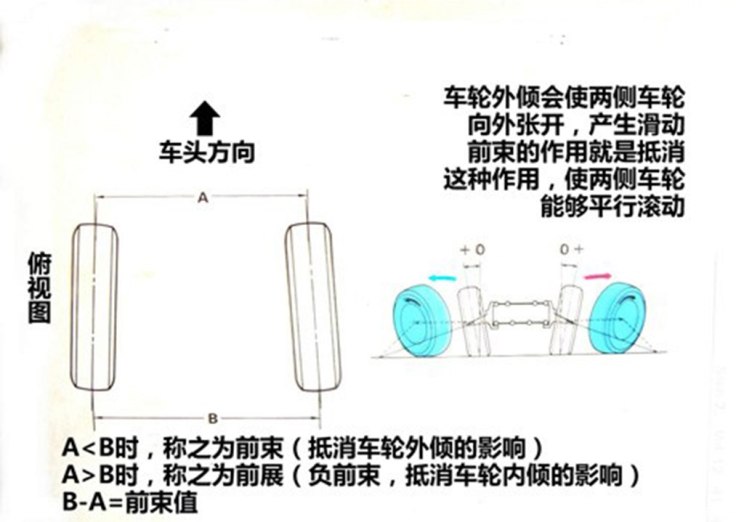
The distance between the front ends of the two front wheels is smaller than the rear end. This is the toe. The function of the toe is to offset the outward expansion of the wheels on both sides caused by the camber. Slippage will also offset the slippage caused by camber, so that the wheels can basically roll forward in parallel without slippage. When the distance between the front end of the wheel is greater than the rear end, it is called negative toe, or forward span. This setting is to offset the adverse effects caused by the inclination of the wheel, and also for the wheel to roll forward in parallel.
Three, four-wheel positioning process
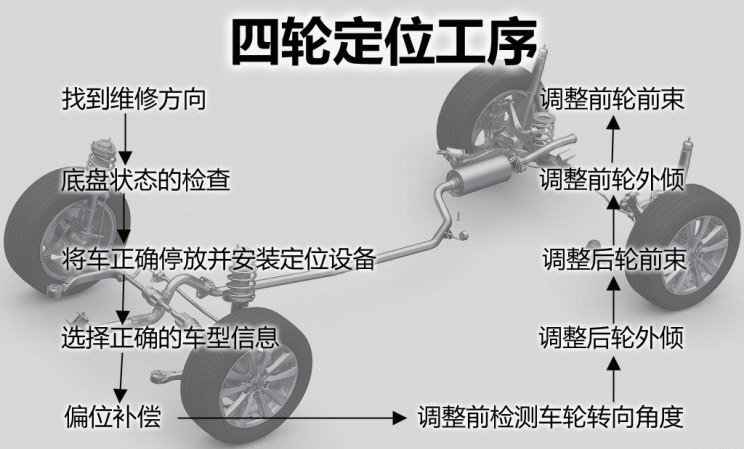
Inaccurate four-wheel positioning parameters can cause tire eccentric wear and cause the risk of puncture; steering wheel shaking and deviation will make you feel more tired while driving, and increase the probability of traffic accidents; fuel consumption will increase. So don't underestimate a four-wheel alignment, it is related to our driving safety!