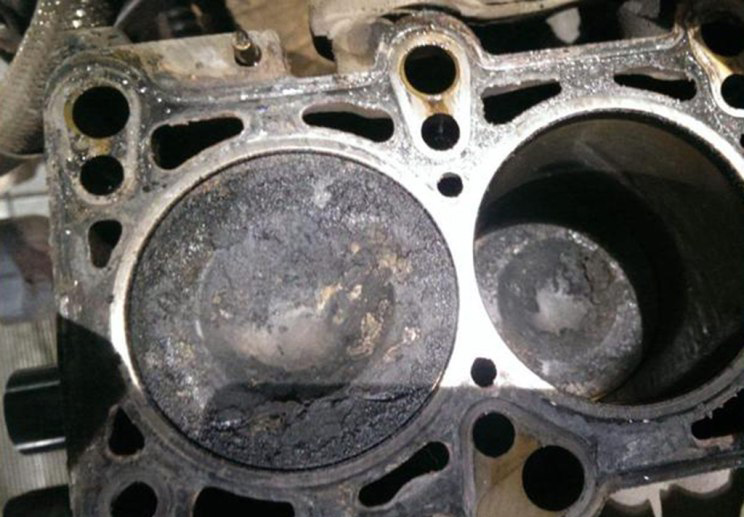
Carbon deposit refers to a kind of engine
Valve, The mixture accumulated on the combustion chamber and intake pipe.
What is carbon deposit,It is caused by the failure of the engine oil to fully burn, forming hydrochloric acid and resin-like gums under the catalysis of high temperature and oxygen, which adhere to the surface of the parts, and then further condense into asphaltenes and oil coke after high temperature. mixture. Carbon deposits can be divided into valve, combustion chamber carbon deposits and intake pipe carbon deposits.
1. Two common types of carbon deposits
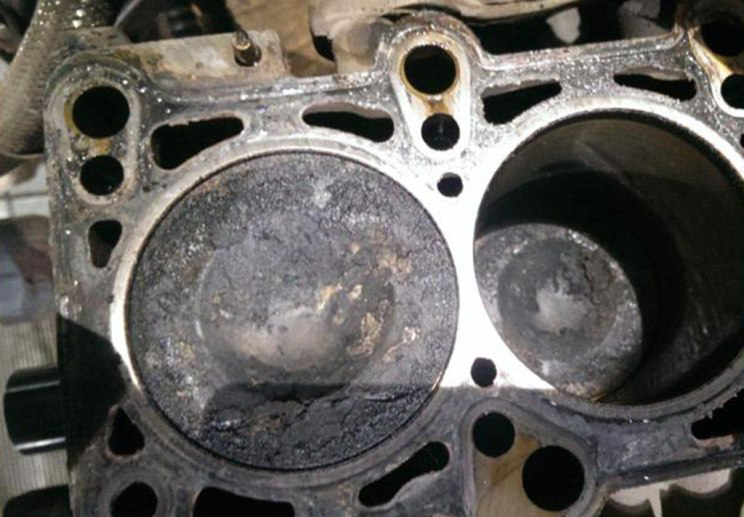
1. Carbon deposits in valve and combustion chamber
Determined by the control characteristics of the EFI engine, every time the cylinder works, fuel is injected and then ignited. When we extinguish the engine, the ignition is immediately cut off, but the gasoline sprayed in this working cycle cannot be recovered. It can only be attached to the intake valve and the wall of the combustion chamber. The gasoline is easy to volatilize, but the wax and gums in the gasoline remain. Over time, the wax and gums in the gasoline accumulate and thicken. After repeated heating Hardening forms carbon deposits. If the engine burns engine oil, or the gasoline is filled with poor quality and more impurities, then the valve carbon deposits will be more serious and the rate of formation will be faster. Because the structure of carbon deposits is similar to sponge, when the valve forms carbon deposits, a part of the fuel injected into the cylinder will be adsorbed, which makes the concentration of the mixture that actually enters the cylinder becomes thinner, resulting in poor engine operation, difficulty in starting, and poor idling. Stability, poor acceleration, r
Carbon deposit refers to a kind of engine
Valve, The mixture accumulated on the combustion chamber and intake pipe.
What is carbon deposit,It is caused by the failure of the engine oil to fully burn, forming hydrochloric acid and resin-like gums under the catalysis of high temperature and oxygen, which adhere to the surface of the parts, and then further condense into asphaltenes and oil coke after high temperature. mixture. Carbon deposits can be divided into valve, combustion chamber carbon deposits and intake pipe carbon deposits.
1. Two common types of carbon deposits
1. Carbon deposits in valve and combustion chamber
Determined by the control characteristics of the EFI engine, every time the cylinder works, fuel is injected and then ignited. When we extinguish the engine, the ignition is immediately cut off, but the gasoline sprayed in this working cycle cannot be recovered. It can only be attached to the intake valve and the wall of the combustion chamber. The gasoline is easy to volatilize, but the wax and gums in the gasoline remain. Over time, the wax and gums in the gasoline accumulate and thicken. After repeated heating Hardening forms carbon deposits. If the engine burns engine oil, or the gasoline is filled with poor quality and more impurities, then the valve carbon deposits will be more serious and the rate of formation will be faster. Because the structure of carbon deposits is similar to sponge, when the valve forms carbon deposits, a part of the fuel injected into the cylinder will be adsorbed, which makes the concentration of the mixture that actually enters the cylinder becomes thinner, resulting in poor engine operation, difficulty in starting, and poor idling. Stability, poor acceleration, rapid refueling and tempering, excessive exhaust gas, increased fuel consumption and other abnormal phenomena. If it is more serious, the valve will not be closed tightly, and a certain cylinder will not work completely because of no cylinder pressure, or even stick to the valve so that it will not return.At this time the valve and
pistonIt will cause movement interference and eventually damage the engine.
2. Carbon deposits in the intake pipe
Since the work of each piston of the entire engine is not synchronized, when the engine is extinguished, the intake valve of some cylinders cannot be completely closed, and some unburned fuel will continue to evaporate and oxidize, especially in the intake pipe.
ThrottleSome softer black carbon deposits are produced in the rear. On the one hand, these carbon deposits will make the wall of the intake pipe rough, and the intake will produce vortexes in these rough places, which will affect the intake effect and the quality of the mixture. On the other hand, these carbon deposits will also block the idle speed channel and cause the idle speed control device to jam or exceed its adjustment range. This will cause low idle speed, idle speed tremor, failure of various accessory devices to increase speed, oil collection and vehicle exhaust, and exhaust gas. Exceeding standards, fuel consumption and other phenomena.
Second, the method of checking carbon deposits
1. Disintegration method
Disassemble the engine and check for carbon deposits. This is very intuitive, but time-consuming and labor-intensive, and every disassembly and assembly of any component will more or less affect its performance and shorten its service life.
2,
Endoscopean examination
Bundle
Spark plugOr remove the fuel injector and use an endoscope to observe the degree of carbon deposits in the valve. This method is very convenient, but the cost of the endoscope is not small, and its usefulness in maintenance is not very wide, so not all maintenance companies are equipped with this equipment.
3. Observe the feedback voltage change
Use a diagnostic computer to read
Oxygen SensorFeedback voltage changes to indirectly detect the presence of carbon deposits.Normal oxygen
sensorThe feedback voltage fluctuates between 0.3-0.7V, and there should be 8 alternations of the maximum value and the minimum value within 10 seconds.Once the valve has carbon deposits, oxygen
sensorThe feedback voltage fluctuates greatly, for example, from 0.3-0.7V to 0.1-0.9V. And the center value of this voltage will become larger, and the frequency of change will slow down. Using a diagnostic computer to read the oxygen sensor's feedback voltage changes saves time and effort, but if the car's own control system is faulty, it cannot be used as a very accurate basis for judgment, and it will also mislead inexperienced personnel's fault diagnosis ideas.Furthermore, this method can only be used for closed-loop EFI
carUse, because only closed-loop control systems are equipped with oxygen sensors.
Three, several methods to reduce, prevent, and remove carbon deposits
1. Fill high-quality gasoline
Impurities such as wax and gum in gasoline are the main components that form carbon deposits. Therefore, gasoline with high cleanliness has a weaker tendency to form carbon deposits. Car owners try their best to refuel at regular gas stations. In addition, some gasoline cleaners can be added appropriately. This can effectively prevent the formation of carbon deposits on the metal surface, and can gradually activate the original carbon particles and slowly remove them, thereby protecting the engine from harm.
2. Don't idle for a long time
If the idling time is long, the time for the engine to reach the normal temperature will be longer, and the gasoline will evaporate slowly after being sprayed to the back of the valve, and carbon deposits will also be generated from this. At the same time, when idling frequently, the air flow into the engine is also small, so that the scouring effect on carbon deposits becomes weak, which will promote the deposition of carbon deposits.
3. Run more at high speed, which can appropriately improve the shifting of hand-gear cars
Rotating speed
The purpose of running at a high speed is to use the scouring effect of the airflow on the intake to prevent carbon deposits. In addition, appropriately increasing the speed of shifting is also similar to that of multi-run high-speed. Changing the original speed of 2000 to 2500 conversion can not only effectively prevent the formation of carbon deposits, but also improve the dynamics of the car, and also avoid it. The knocking caused by too low shift speed protects the engine.
4. Use fuel cleaning and cleaning additives
detergentWhen the engine is working, it is sucked into the fuel supply pipeline by the fuel pump along with the fuel.With the flow of fuel, it can not only wash away
tankThe glue on the inner and gasoline pump filters and the glue and carbon deposits on the fuel injectors can also automatically clean the carbon deposits on the valve and in the engine cylinder when the engine is working normally, so that the engine will "rejuvenate" and rejuvenate. Surging power.Since the glue cleaned from the fuel tank, fuel pump filter screen and fuel pipeline will be deposited in the gasoline
FilterInside, so it must be replaced in time after cleaning without disassembly
Fuel Filter.
It should be noted that because the chemical cleaning components in the cleaning agent have a certain corrosive effect on the rubber fuel supply pipeline, when using this method, you must pay attention to the use cycle and interval time, otherwise it will accelerate the aging and corrosion.
5. Disassemble and clean
The cleaning of the valve carbon deposits is relatively simple.
Intake manifoldAfter that, it can be removed manually or soaked with cleaning drugs.As for the cleaning of the carbon deposits in the engine cylinders, it is necessary to "make great efforts" to remove the cylinder head and timing.
beltWait until it can be cleaned.
After the engine is disassembled and reassembled, its power and sealing performance will be inferior to the original factory, so in general, cleaning the carbon deposits in the engine cylinder should not be done frequently. As a last resort, you must also go to a regular repair shop, otherwise the engine performance will be greatly reduced.