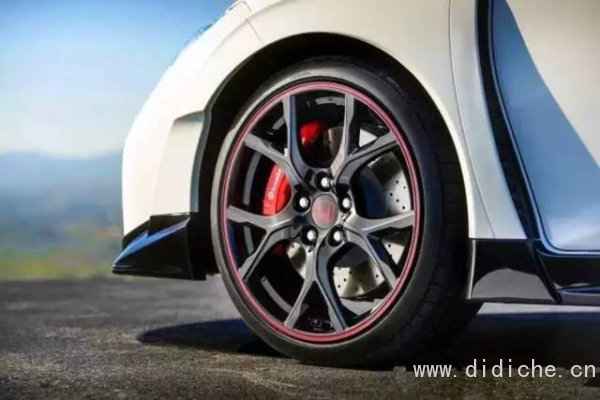
tireexistAuto partsThe medium is a wearable part, so we will inevitably have to face replacement in the process of using the cartireThe problem. Under what circumstances should we replace the tires?
1. When our car has been driven for a certain mileage or used for a certain number of years, the tires need to be replaced.
2. When the tires are driving, the tires are bulged or punctured due to the driver's driving or road conditions.
3. The performance of the original tires of the vehicle cannot meet the demand, and the owners want to replace the tires.
So how should we choose a set of tires that suits our car and our driving style among the dazzling array of tire brands and models?
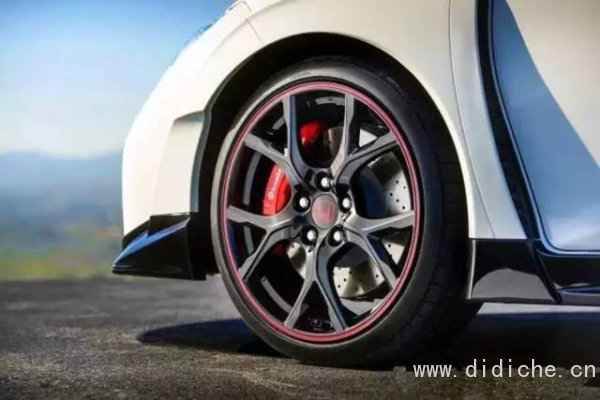
Tires forcarIn other words, it's like shoes that people wear. They are in direct contact with the road surface and are made of rubber and various composite materials. We wear different shoes on different occasions. For different purposes and driving styles, we will also choose different tires. It's just that car tires can't be as simple as changing shoes. It can be said to be a lot of work, so choosing the right set of tires is particularly important. After changing the tires of different brands and different series, the handling of the car will be different, and the different tires may completely change the character of the car. Therefore, you must choose suitable tires according to your own driving style and actual driving conditions.
Automobile tires are wear-and-tear products. Generally, they mu
tireexistAuto partsThe medium is a wearable part, so we will inevitably have to face replacement in the process of using the cartireThe problem. Under what circumstances should we replace the tires?
1. When our car has been driven for a certain mileage or used for a certain number of years, the tires need to be replaced.
2. When the tires are driving, the tires are bulged or punctured due to the driver's driving or road conditions.
3. The performance of the original tires of the vehicle cannot meet the demand, and the owners want to replace the tires.
So how should we choose a set of tires that suits our car and our driving style among the dazzling array of tire brands and models?
Tires forcarIn other words, it's like shoes that people wear. They are in direct contact with the road surface and are made of rubber and various composite materials. We wear different shoes on different occasions. For different purposes and driving styles, we will also choose different tires. It's just that car tires can't be as simple as changing shoes. It can be said to be a lot of work, so choosing the right set of tires is particularly important. After changing the tires of different brands and different series, the handling of the car will be different, and the different tires may completely change the character of the car. Therefore, you must choose suitable tires according to your own driving style and actual driving conditions.
Automobile tires are wear-and-tear products. Generally, they must be replaced in due course when they have been driven for a certain number of kilometers and have been out of the factory for more than a certain number of years (usually five years). The tire factory date is displayed in four digits, the first two digits refer to the week, and the last two digits refer to the year.
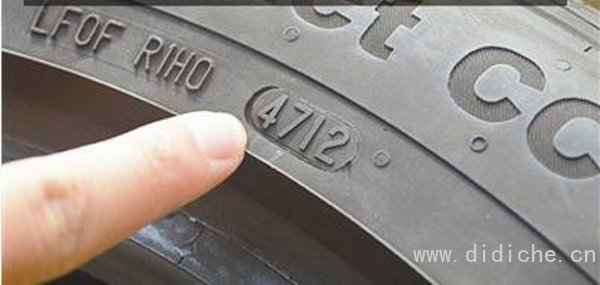
Generally speaking, after five years of leaving the factory, the rubber aging rate of tires will begin to accelerate, and cracks will begin to appear on the edges or tread of the tire. For safety-first car owners, it is safer to replace them in time.
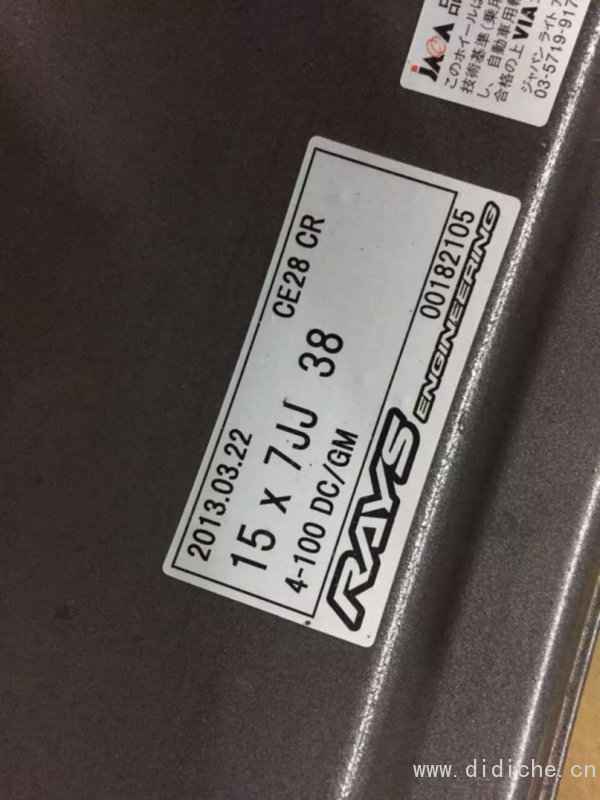
As shown in the picture above, 15 inches isWheel hubDiameter, 7 of 7JJ is the width of the hub, 38 is the ET value of the hub, 4 100 is the number of holes and the pitch of the holes. To determine the width of the tire, it mainly depends on the value of 7JJ. Please refer to the figure below for the tire width to be equipped with wheels of different widths.
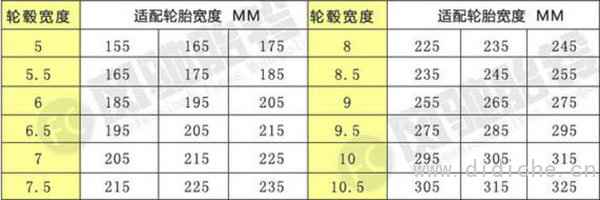
It can be seen that the same J number can be installed with tires one level lower or one level higher than the standard width. But can it be smaller or larger? The answer is yes. The author is now using 7J wheels with 195-width tires. But if the difference is too large, it will bring a little negative effect. For example, many low-profile HF (Hella Flush) players like to use large J-value wheels with smaller tires, which make the edges of the wheels protrude a lot and achieve the perfect visual effect in their minds. But driving at high speed may bring certain safety hazards.
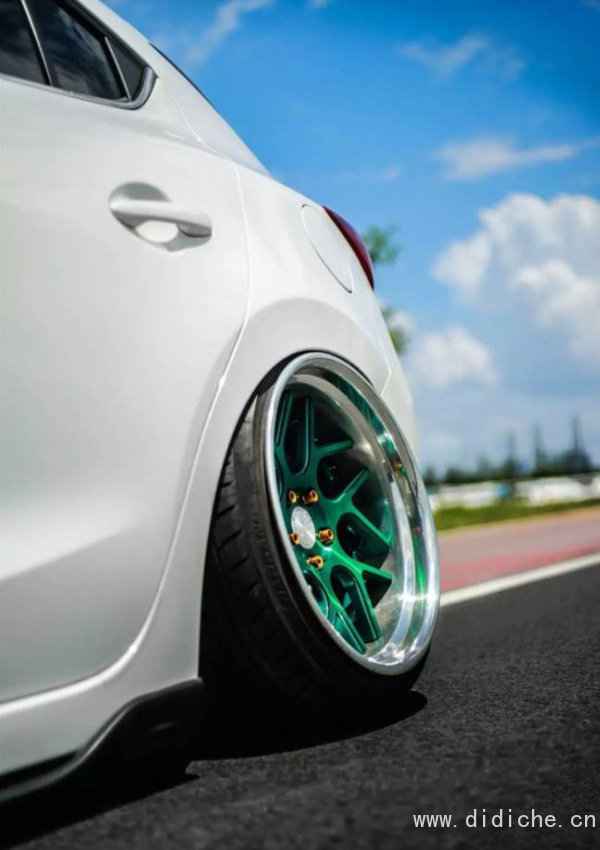
The effect of changing the tire width on the car:
If the width of the tire is increased compared to the original car, the contact area of the tire and the ground can be increased, and the grip can be increased.But at the same time, due to the increase in the contact area, the rolling resistance will increase, and the fuel consumption will increase significantly. In addition,steering wheelIt will also sink. At this time, it can be solved by adjusting the camber angle of the wheel (adjust to a negative inclination angle, outer eight), and correspondingly reduce the contact area, and at the same time increase the contact area of the tire when cornering intensely.But the adjustment of the camber angle (negative inclination) will make the tireInner tubeThe wear is accelerated, eccentric wear occurs, and tire life is shortened. In addition, due to the greater grip of general sports tires, which is equivalent to greater friction and rolling resistance with the ground, the fuel consumption will be higher than that of comfortable and silent tires. Moreover, widening the tires will also have a bad effect on comfort, that is, more road conditions will be transmitted to the car body through the tires.
Conversely, if you change to a tire that is a little narrower than the original car's tires, in addition to the worse grip than the original car, it will bring about the advantages of lower fuel consumption, more agile steering, and more comfortable.
2. The flatness of the tire
The second tire parameter is the number behind the width, which is generally represented by two digits such as 65 50 45 40. This parameter is called the flatness rate of the tire, which roughly indicates the thickness of the sidewall (it can be simply understood as the distance from the edge of the wheel to the tire contact surface). The calculation method is the tire width multiplied by the flatness rate of 100ths. Take 195 65R15 as an example, its sidewall thickness is 195 times 0.65 equal to 126.75mm.
The impact of flat rate changes on vehicles:
As mentioned above, if the tire is widened, the aspect ratio must be changed accordingly to ensure that the outer circumference of the tire is as close to the original tire circumference as possible, and it will not cause too much deviation in the speedometer. It is generally believed that the deviation of diameter or circumference within 3% is acceptable. For example, if the width of the original tire 185 60R15 is increased by one level to 195 tire width, the flatness rate will be reduced by one level. With the flatness rate of 55, the deviation is about 1.25%, which is within the acceptable range and the deviation is quite small. .
The reduction in flatness directly affects comfort. Under the same conditions, the thicker the sidewall, the better the comfort; the thinner the sidewall, the worse the comfort. This should be easier for everyone to understand. The thinner the sidewall of the tire, the lower the wheel hub from the ground, and the less space for the tire to compress and deform. The smaller and harder sidewall will inevitably reduce the comfort. Moreover, tires with lower flatness are more prone to bulging after driving through some large pits or climbing some steps at high speed during driving. In addition, the lower the flatness rate, the more vibrations are transmitted to the body, which will also have a negative impact on the life of the car's chassis parts.
The modification industry is pursuing the largest possible wheel size and tires with the lowest flatness rate. The visual effect looks very good, but it will bring the above-mentioned various drawbacks.
3. Radial tire marking
The third is the letter R in the middle. This R represents that the tire is a radial tire. At the same time, we can also see the tires of ZR, where Z represents the speed level of the tire, which is generally found on sports cars, sports cars or modified sports tires, which means that the maximum speed is greater than 240km/h, in general small cars and general cars. It is impossible to reach this maximum speed.
4. The diameter of the wheel corresponding to the tire
The fourth parameter is the number after R, which represents the diameter of the wheel corresponding to the tire. This is easy to understand. If the wheels are a few inches, just buy a few inches of tires. If you don't have modified wheels, you can buy them according to the specifications of the original car.
5 Tire load-bearing index
The following numbers such as 82 84 refer to the tire's load-bearing index. The load-bearing index refers to the value expressed by the maximum load that a tire can load under specified conditions in the maximum air pressure. Generally speaking, larger and heavier cars require a larger load-bearing index, so we see that the tires on mini cars are generally 82 84, while those on large SUVs reach 105 or higher. The maximum load capacity corresponding to different numbers is as follows:
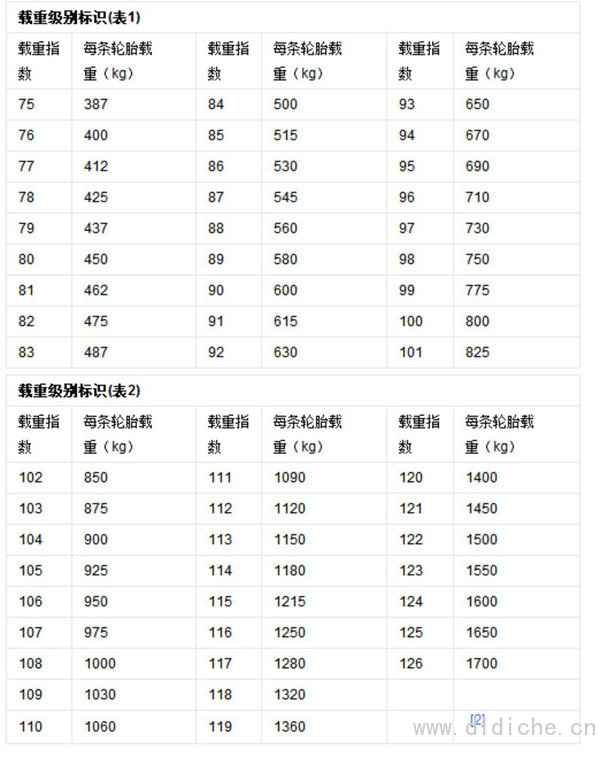
When choosing tires, we should pay attention to choosing the same or higher load-bearing class as the original factory. Choosing a lower load-bearing level than the original factory will bring risks.
6 Tire speed rating
The last letter, generally a single letter of J-Y, represents the maximum safe speed that the tire can withstand, and VR ZR is a special way of expression. Generally, luxury cars and sports tires have higher speed ratings, while off-road tires or some urban SUV tires have higher speed ratings. The speed represented by different letters is as follows:
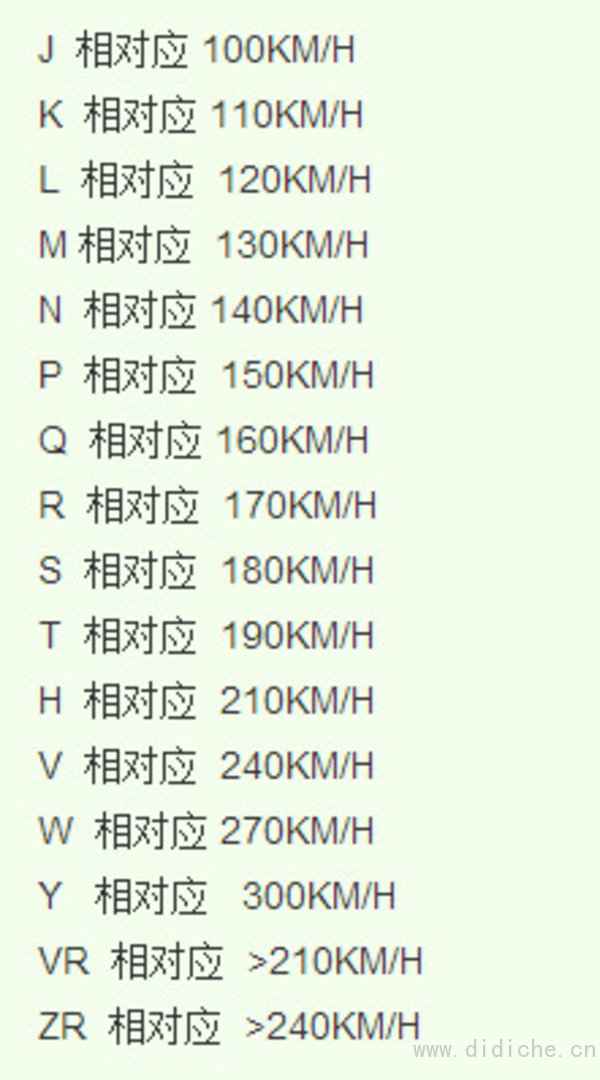
In the choice of speed class, we also try to choose the same or higher speed class as the original tire. Choosing a lower speed grade than the original factory may be slightly cheaper, but it will bring potential risks.
Let's talk about the choice of tire type below:
1. It is also the easiest way to buy according to the brand, series, model and specifications of the original tire. It means buying the same tires as the original car. If you feel that the original car’s tires can meet your needs and feel good when used, you can choose the original car’s matching tires, and don’t bother to think too much.
2 If you are dissatisfied with the road noise produced by original tires, you can choose silent tires. Now many tire manufacturers have launched silent tire series, you can buy according to specifications.
3 If you are dissatisfied with the sports performance of the original tires, you can choose sports tires. Sports tires can provide better grip, maximize straight-line acceleration and corner performance, and are the first choice for modification enthusiasts or off-track owners, including a number of semi-hot-melt high-performance street tires.
4 Run-flat tires. Many luxury car brands now have run-flat tires as standard on their mid-to-high-end cars, and spare tires have been cancelled. Runflat tires are called runflat in English, and runflat tires in Chinese. Adopting a special wheel surface and thicker sidewall design, as well as the application of high temperature resistant rubber materials. When the tire is punctured or in the process of rapid deflation, cooperate with the edge of the wheel to ensure that the tire will not fall off from the wheel. , To maximize the prevention of accidents caused by a puncture. It can also travel 250 kilometers at a speed of 80 kilometers per hour after being flattened, ensuring that it can drive to the nearest tire shop.
Of course, car owners have various demands on tires, such as energy-saving tires, wear-resistant tires, off-road tires, and so on. Energy-saving tires reduce rolling resistance to reduce fuel consumption, while the wear-resistant series is suitable for some economical vehicles, and does not require high comfort and quiet performance, but is suitable for users who are more sensitive to tire life and operating costs. No tire can maximize all the characteristics mentioned above, so you can only choose a tire that suits your needs.