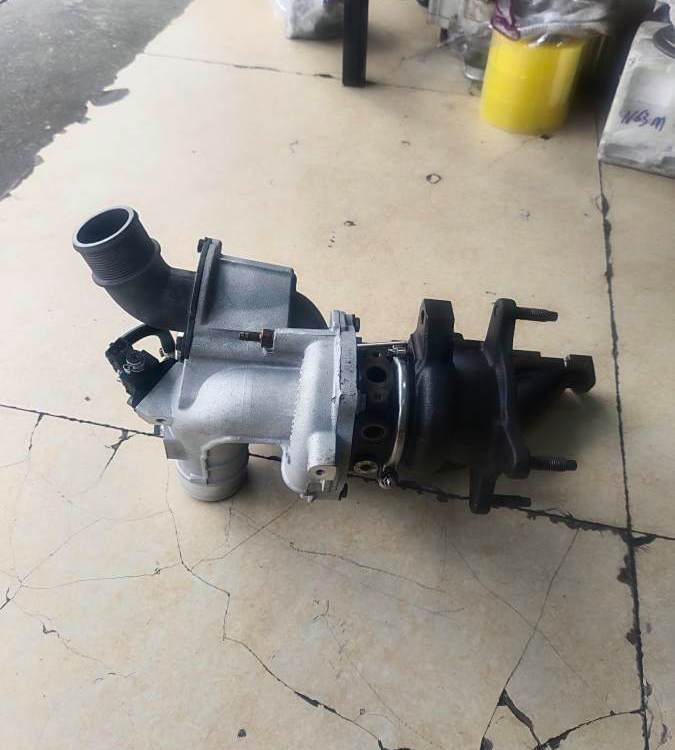
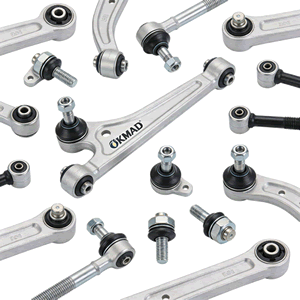
The axle is the core component of the automobile transmission system and plays the important functions of transmitting power, supporting the body and steering. Its performance directly affects the vehicle's control stability, driving safety and power transmission efficiency. According to structural differences, axles can be divided into two types: integral and disconnected. The former is mostly used in non-independent suspensions, while the latter is common in independent suspension systems. This article will take the axle adapted for turbocharged models as an example to analyze its technical principles and application scenarios.
1. The composition and working principle of the axle The axle is mainly composed of axle housing, main reducer, differential and half shaft. After the power is transmitted from the engine to the axle through the transmission, the main reducer reduces the speed and increases the torque through the gear set. The differential distributes power according to the wheel speed difference to ensure that the inner and outer wheels obtain reasonable speeds when the vehicle turns. The half shaft serves as the end of power transmission, transmitting torque to the drive wheels. Due to the large engine output torque, turbocharged models place higher requirements on the gear strength, heat dissipation performance and material durability of the axle.
2. Technical features for adapting to turbocharged models. In view of the high torque characteristics of the 2.0T turbocharged engine, the gear design of the adapted axle needs to be optimized. For example, the carburizing and quenching process is used to improve the surface hardness of the gear and reduce the risk of wear; the axle housing structure is optimized through finite element analysis to enhance impact resistance;
The axle is the core component of the automobile transmission system and plays the important functions of transmitting power, supporting the body and steering. Its performance directly affects the vehicle's control stability, driving safety and power transmission efficiency. According to structural differences, axles can be divided into two types: integral and disconnected. The former is mostly used in non-independent suspensions, while the latter is common in independent suspension systems. This article will take the axle adapted for turbocharged models as an example to analyze its technical principles and application scenarios.
1. The composition and working principle of the axle The axle is mainly composed of axle housing, main reducer, differential and half shaft. After the power is transmitted from the engine to the axle through the transmission, the main reducer reduces the speed and increases the torque through the gear set. The differential distributes power according to the wheel speed difference to ensure that the inner and outer wheels obtain reasonable speeds when the vehicle turns. The half shaft serves as the end of power transmission, transmitting torque to the drive wheels. Due to the large engine output torque, turbocharged models place higher requirements on the gear strength, heat dissipation performance and material durability of the axle.
2. Technical features for adapting to turbocharged models. In view of the high torque characteristics of the 2.0T turbocharged engine, the gear design of the adapted axle needs to be optimized. For example, the carburizing and quenching process is used to improve the surface hardness of the gear and reduce the risk of wear; the axle housing structure is optimized through finite element analysis to enhance impact resistance; some models will also add a forced cooling system to prevent excessive oil temperature caused by long-term high-load operation. In addition, the configuration of the differential locking function can improve the vehicle's passability in complex road conditions, but attention should be paid to the impact of this function on the smoothness of daily driving.
3. Installation and Maintenance Precautions The vehicle axle replacement must strictly follow the vehicle maintenance manual specifications. Before installation, it is necessary to check the matching dimensions of the axle housing and suspension to ensure that the installation holes are aligned; when filling gear oil, use lubricating oil that meets the specifications and control the oil volume within the standard range. In daily use, you should avoid long-term overloading or intense driving, and regularly check the axle housing for oil leakage, abnormal noise, etc. If the half-shaft dust jacket is found to be damaged, it must be replaced in time to prevent impurities from entering and causing joint wear. If quality problems occur during the warranty period, please contact after-sales service for professional testing.
🛒 Jingyu Auto Parts has sufficient inventory of Trumpchi 2.0T turbocharged auto parts and perfect after-sales service
4. Technical parameters and selection based on axle selection should refer to parameters such as total vehicle mass, engine torque, suspension type, etc. For example, passenger cars with a total mass of less than 2 tons usually use axles with a load-bearing capacity of 3-5 tons; models with a maximum engine torque of more than 350N·m need to choose a model with a larger gear module to improve impact resistance. Independent suspension models require disconnected axles to match the suspension movement, while non-independent suspensions require integral axles. Users can accurately match the parts number in the vehicle maintenance manual, or obtain axle wear data through professional testing equipment as a basis for replacement.