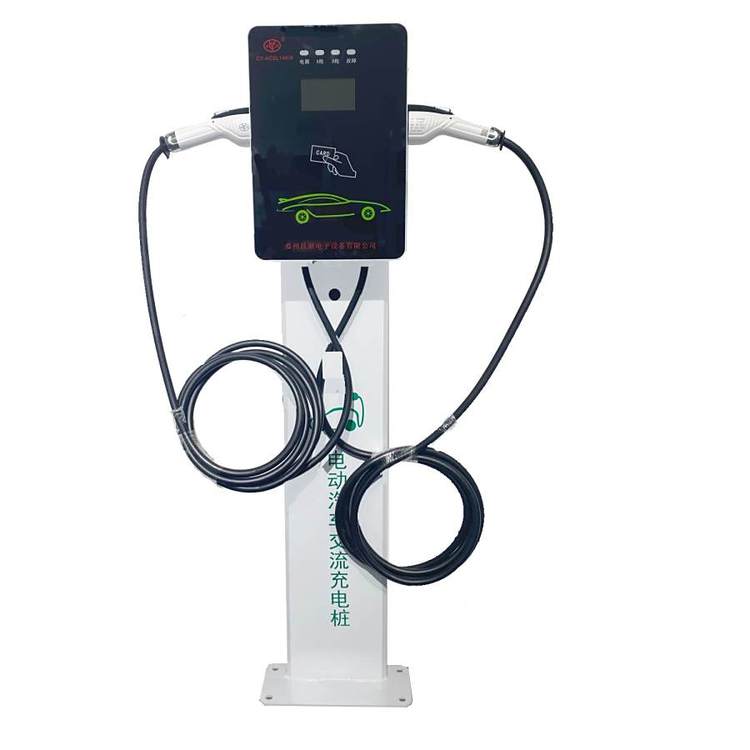
With the popularity of new energy electric vehicles, charging piles are core supporting equipment, and their performance directly affects charging efficiency and user experience. Public electric vehicle charging piles are charging equipment specially designed for new energy vehicles. They are connected to vehicles through standardized interfaces and convert AC power into adapted DC or AC power to achieve safe and efficient power supply. Its core function is to solve charging needs in public places or specific scenarios, covering a variety of environments such as homes, communities, commercial districts, and transportation hubs.
1. Technical parameters and hardware design: The charging pile uses 220V voltage input, output power is 7kW, and output current is 32A, which can meet the charging needs of mainstream new energy models. The device is equipped with a dual-gun design that supports charging two vehicles at the same time. The gun line length is up to 5 meters and can be flexibly adapted to different parking locations. The metal casing structure not only improves the durability of the device, but also effectively dissipates heat and adapts to complex outdoor environments. In addition, the charging pile has a built-in 4G networking module, which can upload charging data to the management platform in real time, allowing operation and maintenance personnel to remotely monitor the status of the equipment.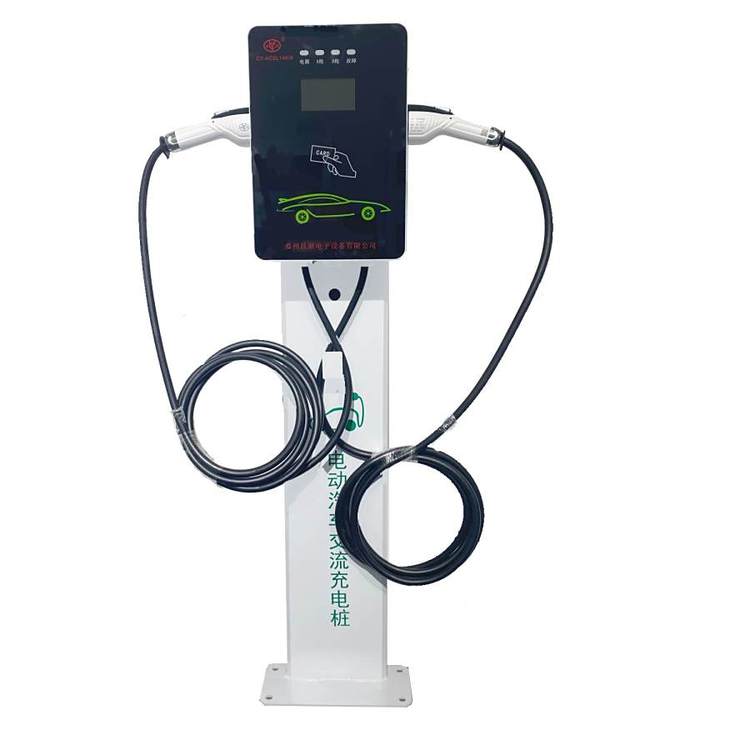
2. Usage and safety design: Users can start charging by scanning the QR code or swiping their card. The operation process is simplified to three steps: connect the charging gun, select the payment method,
With the popularity of new energy electric vehicles, charging piles are core supporting equipment, and their performance directly affects charging efficiency and user experience. Public electric vehicle charging piles are charging equipment specially designed for new energy vehicles. They are connected to vehicles through standardized interfaces and convert AC power into adapted DC or AC power to achieve safe and efficient power supply. Its core function is to solve charging needs in public places or specific scenarios, covering a variety of environments such as homes, communities, commercial districts, and transportation hubs.
1. Technical parameters and hardware design: The charging pile uses 220V voltage input, output power is 7kW, and output current is 32A, which can meet the charging needs of mainstream new energy models. The device is equipped with a dual-gun design that supports charging two vehicles at the same time. The gun line length is up to 5 meters and can be flexibly adapted to different parking locations. The metal casing structure not only improves the durability of the device, but also effectively dissipates heat and adapts to complex outdoor environments. In addition, the charging pile has a built-in 4G networking module, which can upload charging data to the management platform in real time, allowing operation and maintenance personnel to remotely monitor the status of the equipment.
2. Usage and safety design: Users can start charging by scanning the QR code or swiping their card. The operation process is simplified to three steps: connect the charging gun, select the payment method, and confirm charging. The equipment supports the national standard universal interface and is compatible with most new energy electric vehicles on the market. In terms of safety, the charging pile has over-current protection, leakage protection and short-circuit protection functions. When abnormal current or voltage fluctuation is detected, the power supply will be automatically cut off and a fault message will be prompted. At the same time, the gun head design is ergonomic, comfortable to hold and non-slip, preventing it from falling off during operation.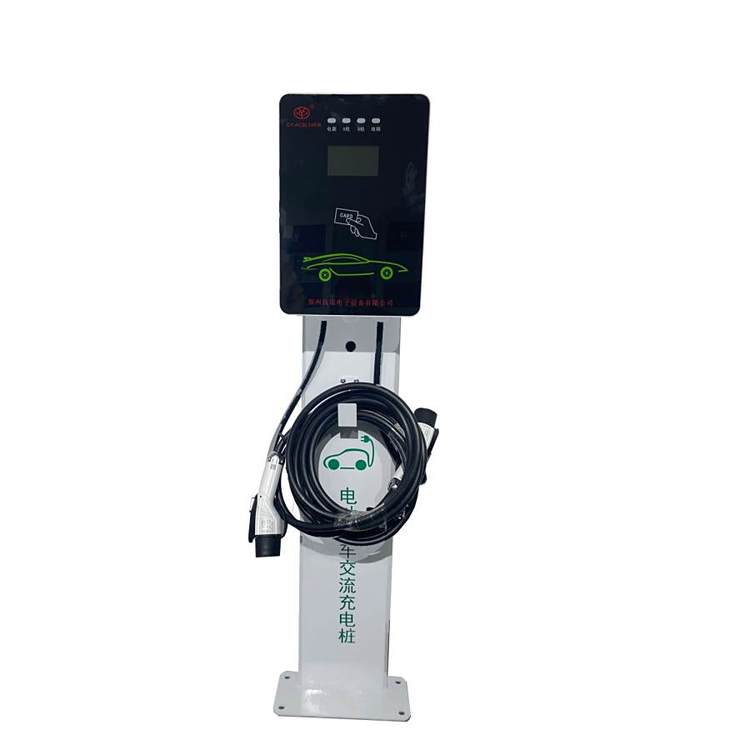
3. Application scenarios and practical advantages: The core advantage of public charging piles lies in their multi-scenario adaptability. In community scenarios, the dual-gun design can reduce the space occupied by the equipment and meet the simultaneous charging needs of multiple users; in commercial areas or transportation hubs, 7kW power can replenish 80% of the vehicle's power within 3-4 hours, balancing charging efficiency and grid load. In addition, the 4G networking function supports the connection between charging piles and intelligent management systems. Operators can view data such as equipment usage and charging time in real time to optimize layout strategies. Compared with traditional charging equipment, this solution reduces later maintenance costs through standardized interfaces and modular design.
🛒 Public electric vehicle new energy vehicle charging pile national standard universal charging equipment
4. Technical highlights and user experience: The technical highlights of this charging pile are reflected in the balance between efficiency and convenience. The 7kW power belongs to the AC slow charging category. Although the charging speed is not as fast as DC fast charging, it can reduce the loss of the battery and extend the service life. The dual-gun design uses shared power distribution technology to automatically adjust the output current when two vehicles are charging at the same time to avoid overload. User feedback shows that the dual options of scan code payment and card payment cover the usage habits of users of different ages, and the 5-meter cord length solves the problem of the charging interface being out of reach due to parking space planning.